
Articles
Articles written for you, checked before you see them.
Mary researches first, then writes in your voice and checks the result. Articles are built to show up on Google and in AI answers such as ChatGPT. Nothing is published until a person approves it.
- Standard
- Pillar
- Long-form
What happens to every article, from first idea to published?
Seven steps, in the same order every time. Mary does the work; you decide at the two points marked “you”.
- 1Mary proposes · you accept
Your brand voice, set once
Mary proposes how your business sounds from your website: tone, who you write for, words you never use and anything every article must say. You accept or edit each field.
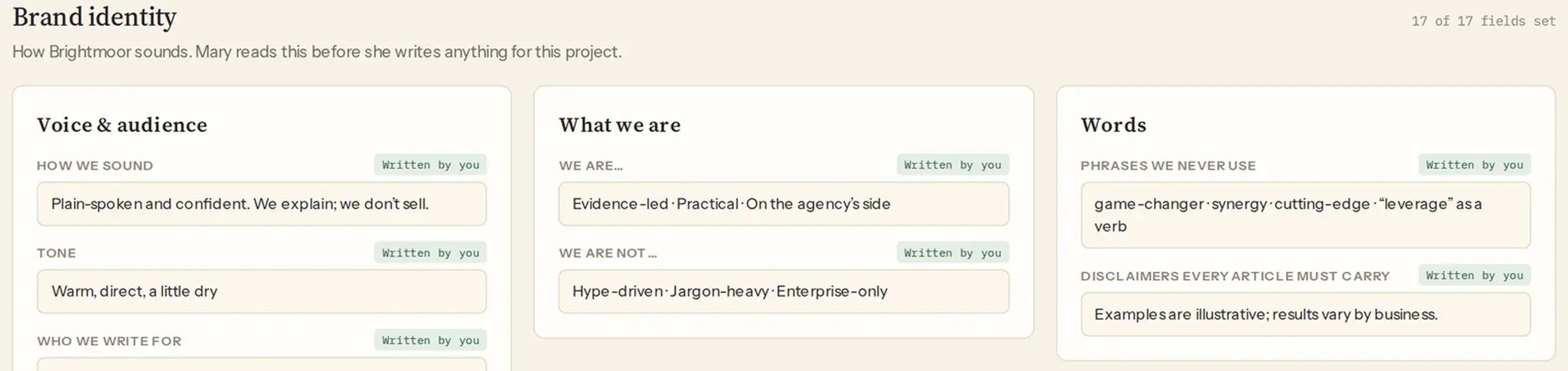
Real screen with sample data - 2Mary
Research first
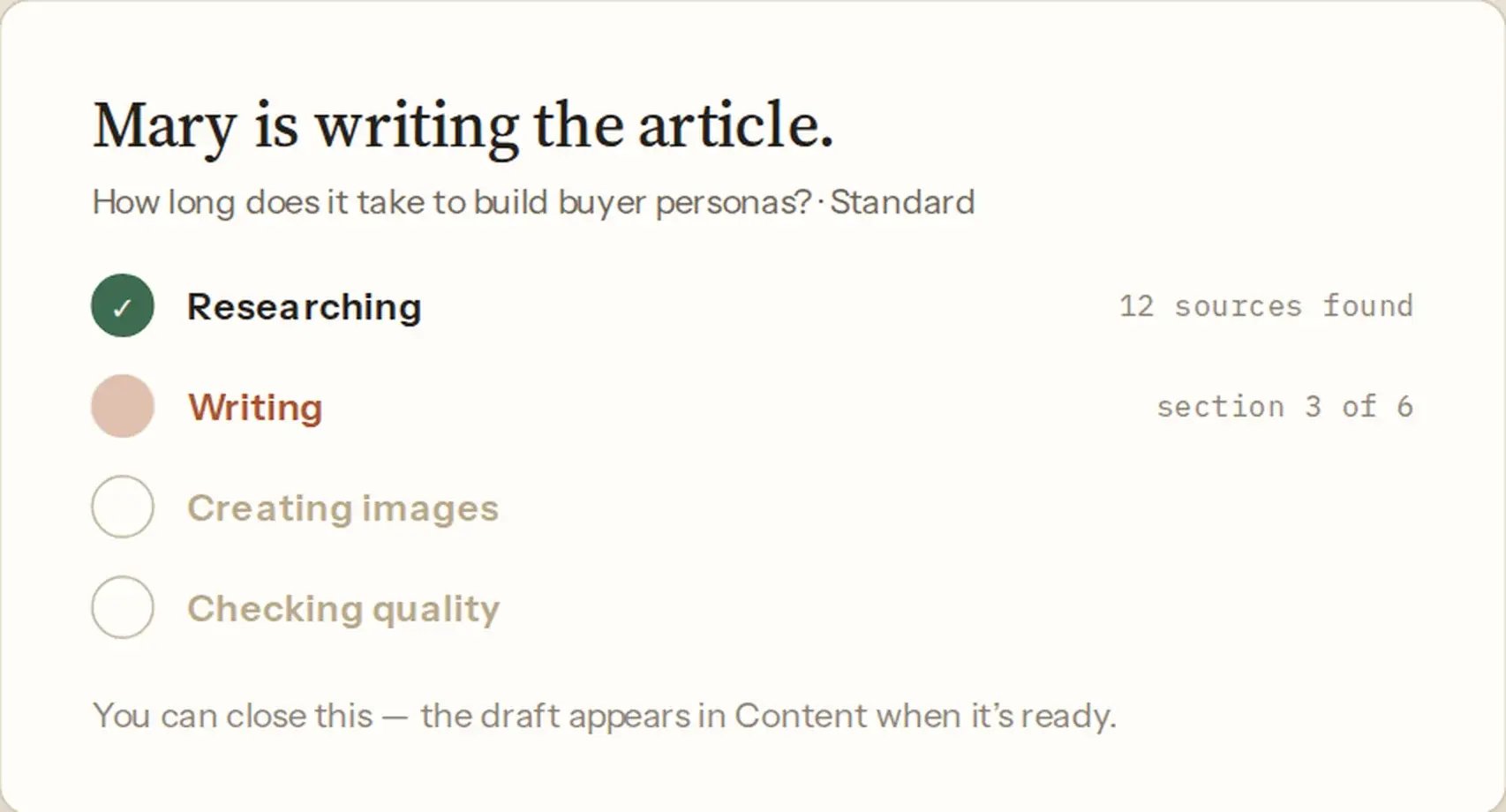
Before writing a word, Mary researches the question and keeps every source. If the research comes back thin, the article says so rather than bluffing.
The run ladder. Real screen in the page header. - 3Mary
The draft, and what it was written from
Every article carries a “written from” strip: which customer profiles, which parts of the company analysis and which research it used.

Real screen with sample data - 4Mary
Images, each with a text description
Mary creates images in the right sizes for the top of the article and the body. Each one comes with a text description for people using screen readers. If an image fails, the article doesn’t.
Illustrative card with sample data - 5Mary
An automatic quality check
Findings come in three groups: must fix, should fix and flagged for review. Each says what was expected, what was found and what to do. Checks that couldn’t run are listed too, so a clean report never hides one.
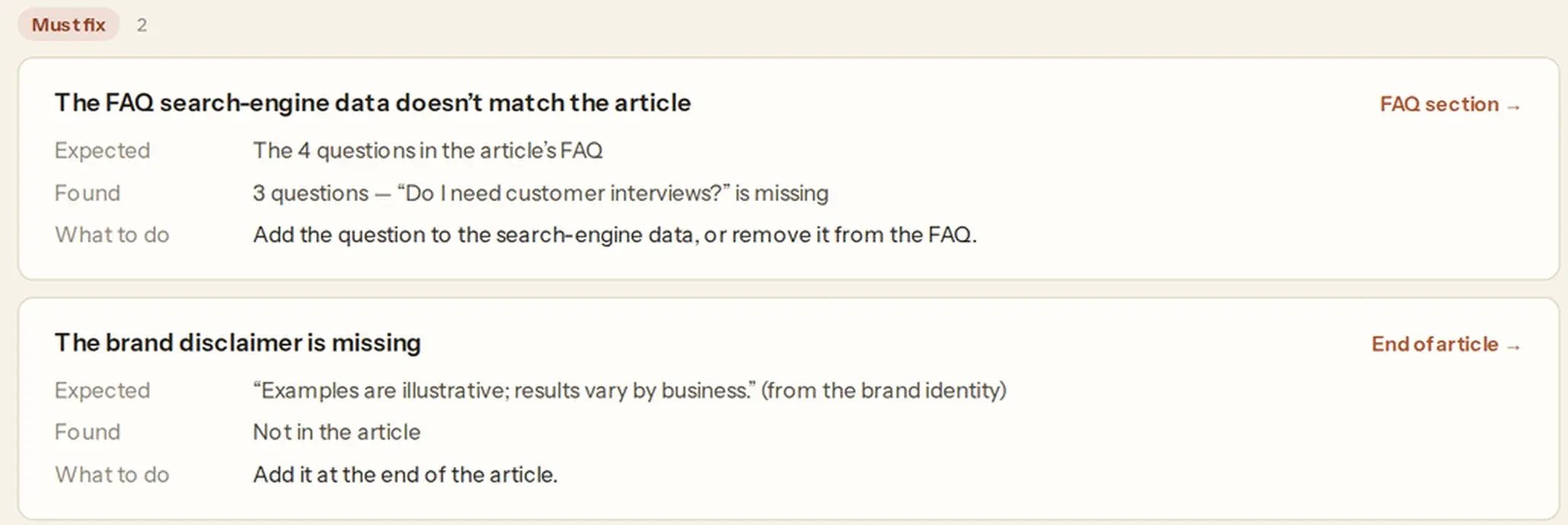
Real screen with sample data - 6You
You approve it, or ask for changes
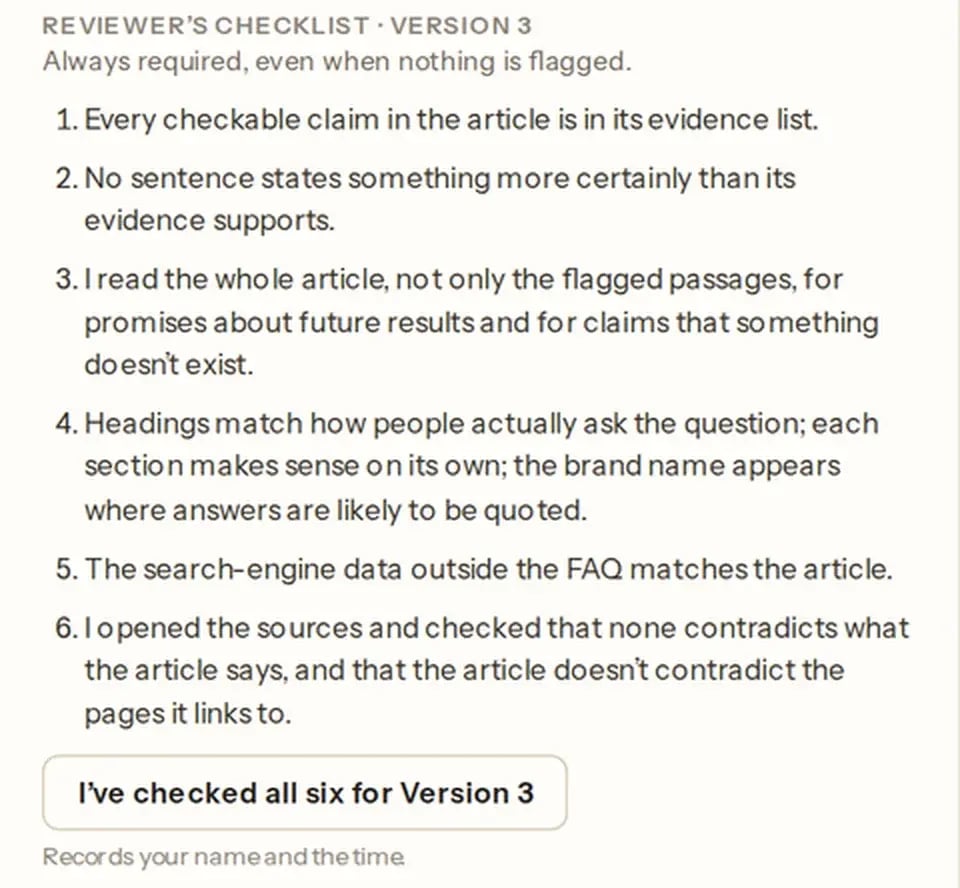
Approval stays locked until the must-fix issues are fixed and every flagged passage has a decision. Then you approve against a short checklist. An approved article is locked, and any change starts a new version.
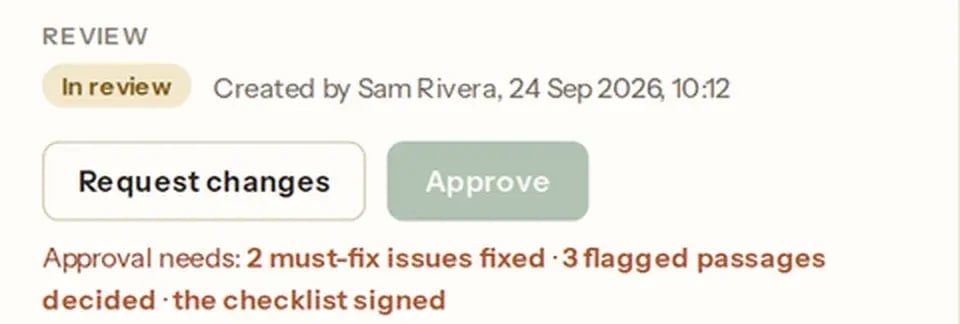
Real screens with sample data - 7Mary, after your OK
Published where you already publish
Approved articles go to your HubSpot site in the first release. WordPress follows shortly after.
What does the quality check look for?
Articles are written to the standard AI answer engines cite: the way ChatGPT, Perplexity and Google’s AI Overviews quote their sources. The check makes sure each article meets it.
- Every claim that can be checked has its evidence listed.
- Headings match how people actually ask.
- The data search engines read matches what the article says.
- Promises about future results are flagged for a person to decide.
- Your brand voice is followed, including required disclaimers.
Do you write your own articles this way?
Yes. Research first, every claim sourced, a person signing off. Two examples:
Questions about articles
What does “the standard AI answer engines cite” mean?
AI answer engines are tools like ChatGPT, Google’s AI Overviews and Perplexity that answer questions directly. The standard is content they tend to quote: headings phrased the way people ask, each section answering one question on its own, every checkable claim backed by a source, and search-engine data that matches the article.
Does Mary publish anything automatically?
No. Every article goes through the quality check and waits for a named person to approve it against a six-point checklist. Approval stays locked until every must-fix issue is fixed and every flagged passage has a decision.
What if the research on a topic is thin?
The article says so where it matters, rather than bluffing. You’ll see a note such as “Mary found little published research on this question.”
How does Mary match our brand voice?
Mary proposes your brand voice from your website: tone, audience, reading level, spelling, what you are and aren’t, phrases you never use and required disclaimers. You accept or edit each field before Mary writes anything.
Can I change an article after it’s approved?
Yes, but not silently. An approved article is locked, so any change starts a new version, which goes through the quality check and needs its own approval.
Where can Mary publish?
HubSpot integration is part of the first release. WordPress follows shortly after.
Articles you can check, line by line.
Join the early-adopter list and be one of the first to give Mary your web address.