
How Mary checks her work
How Mary knows what she knows.
Mary can’t write a quote. She can only find one.
Every claim carries a label saying where it came from. Quotes are taken from the page, never written. Anything that can’t be checked is left out, and Mary tells you how much.
“We’re based in Clerkenwell, London, and work with clients across the UK.”stated on your website · brightmoor.co.uk/about
What is Marketing Mary’s method, in one paragraph?
Evidence first. Every statement about a company carries one of four labels saying where it came from. Quotes are pulled from Marketing Mary’s stored copy of the page and checked, never written. Anything that can’t be verified isn’t shown as fact, and the screen says how many claims were left out. Personas show how much of them rests on the company’s own website, outside research and Mary’s synthesis. A person approves everything before it goes anywhere.
Figure 1
What do the labels look like on a real screen?
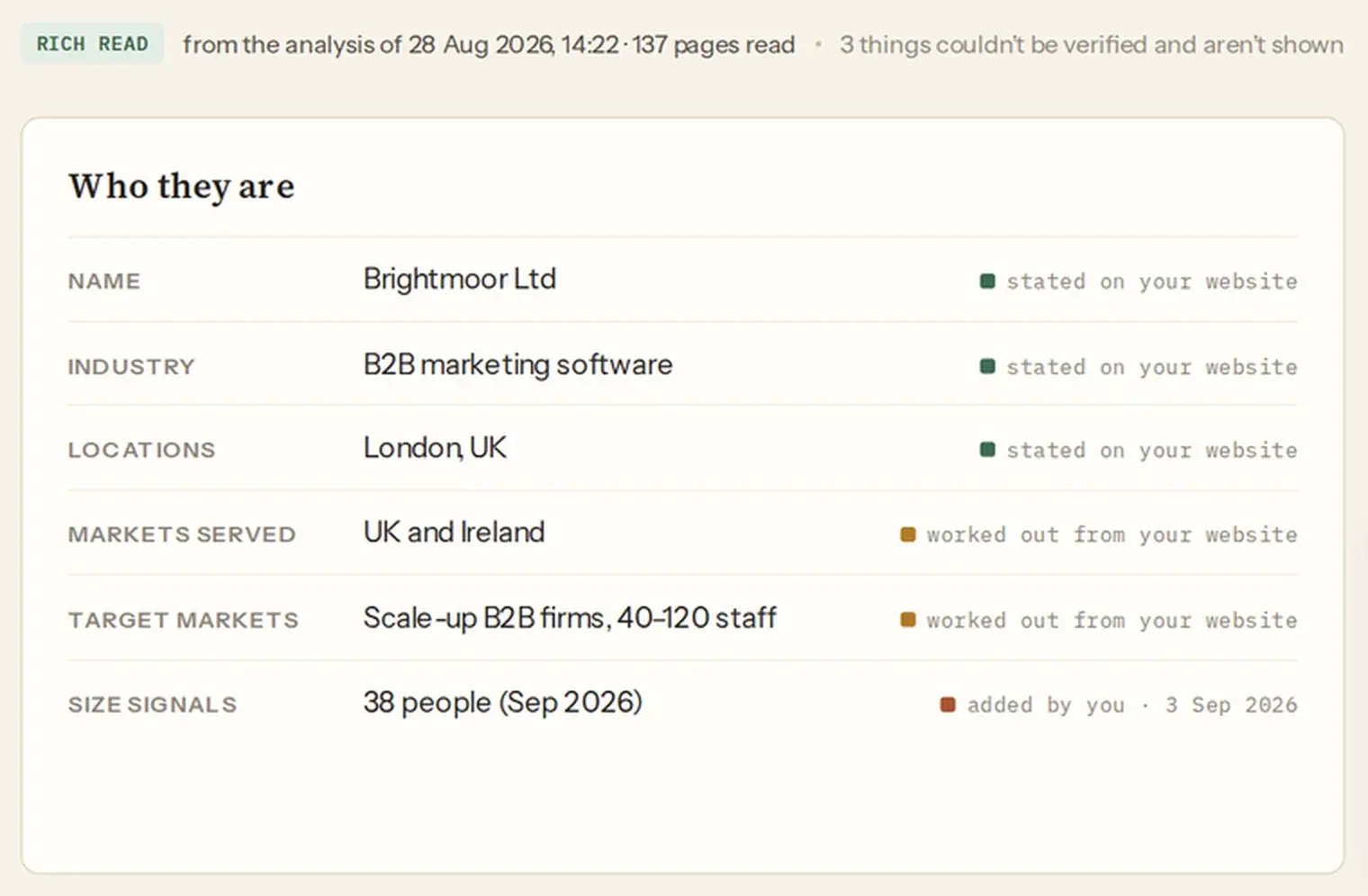
Fig. 1 · Real screen with sample data. The fourth label, “inferred”, appears in Fig. 3.
Figure 2
How does a quote get from your website to your screen?
Mary isn’t allowed to write a supporting quote. She names the pages that support a claim. Marketing Mary then pulls the exact sentence from its stored copy of the page and checks it. A made-up quotation is prevented by design, not just discouraged.
- 1 · The pageMary reads the pagebrightmoor.co.uk/about
- 2 · Stored copyA copy is keptread Aug 28, 2026
- 3 · The claimMary names the page that supports it“based in London” → /about
- 4 · The checkThe exact sentence is pulled and checked✓ found on the stored page
- 5 · On your screen“We’re based in Clerkenwell, London, and work with clients across the UK.”stated on your website
Fig. 2 · Diagram with sample data
Figure 3
How much of a persona is Mary’s own reading?
The evidence mix shows it on every persona, as three bars: first-party (the company’s own website), researched (outside research, with sources) and synthesis (Mary’s reasoning, labeled as such). Each section of the dossier is graded the same way, and a confidence level sits beside the mix.
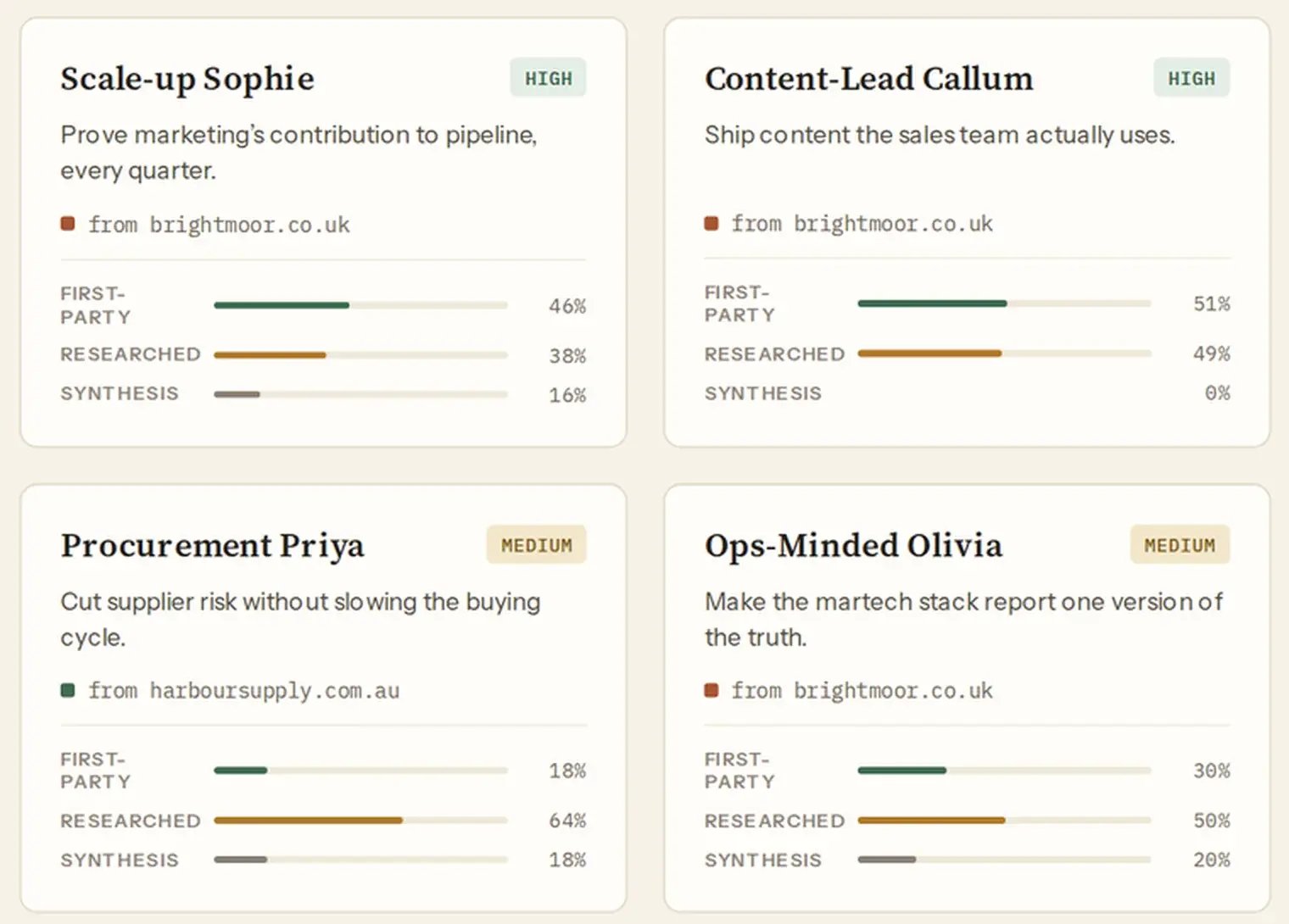
Fig. 3 · Real screen with sample data
What’s the difference between “checked and fine” and “never checked”?
“Checked and fine” means Mary ran the check on that page and it passed. “Never checked” means the check didn’t run, so Mary makes no claim either way.
Mary runs about 60 technical checks on every page she reads and keeps the two apart, so a site is never reported clean when nobody looked. Article quality checks follow the same rule: checks that couldn’t run are listed, with the reason.
Does the same website give the same report?
Yes. The same input produces the same report, with its sources included. Download it as a web page, Markdown or a PDF.
Who approves what Mary makes?
People do, before anything goes anywhere. Corrections carry a name and a date. Articles and plan pieces wait for a named person to sign a six-point checklist, and an approved version is locked.
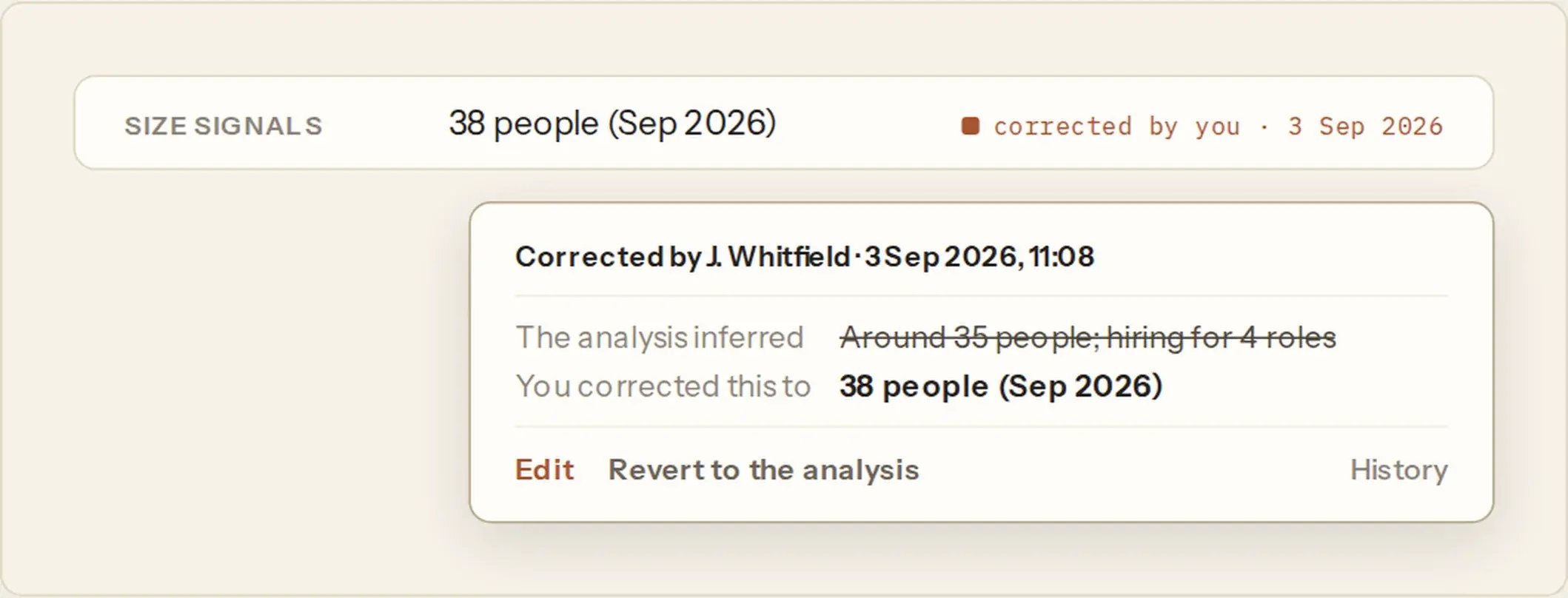
Fig. 4 · Real screen with sample data
Glossary
What do Mary’s labels and terms mean?
Each term as Mary uses it, with an example line from the sample data.
- stated on your website
- Copied from a named page on the website. Point at the claim to see the sentence and the page.e.g. “Based in Clerkenwell, London” · /about
- worked out from your website
- Pieced together from what several pages say, with the pages listed.e.g. “Mainly across the UK and Ireland” · 9 pages
- added by you
- Supplied or corrected by a person on the account, with their name and the date. Mary’s original reading is kept.e.g. “38 people” · Sep 3, 2026
- inferred
- Mary’s own reading. It isn’t stated on any page, and it’s always labeled that way.e.g. “Around 35 people” · Mary’s original reading
- quote
- An exact sentence taken from Mary’s stored copy of a page and checked against it. Mary never writes one.
- couldn’t be verified
- A claim Mary couldn’t check against its pages. It isn’t shown as fact, and the screen counts it.e.g. “3 claims couldn’t be verified and aren’t shown”
- evidence mix
- How much of a buyer persona (a profile of one kind of best customer) rests on first-party evidence, outside research and Mary’s synthesis.e.g. first-party 46% · researched 38% · synthesis 16%
- checked and fine
- A website check that ran on a page and passed.
- never checked
- A check that didn’t run on a page. Mary makes no claim either way.
Questions about how Mary checks her work
Can Marketing Mary make up a quote?
No. Mary names the pages that support a claim, and Marketing Mary pulls the quote from its stored copy of that page and checks it. Mary can’t write a quotation herself, so a made-up quote is prevented by design.
What does “inferred” mean?
“Inferred” marks Mary’s own reading of a company: something that isn’t stated on any page. It’s always labeled, so you can tell it apart from what the website actually says.
Why would Mary leave a claim out?
Because it couldn’t be verified against the pages it came from. Claims that can’t be verified aren’t shown as fact, and the screen tells you how many were left out.
Is a persona just Mary’s opinion?
No. Each persona shows its evidence mix: how much rests on the company’s own website, on outside research with sources, and on Mary’s synthesis. Each dossier section is graded and cites its sources, so you can see which parts are Mary’s reading.
What does “never checked” mean?
It means a check didn’t run on that page, so Mary makes no claim either way. It’s kept apart from “checked and fine”, so a site is never reported clean when nobody looked.
Does anything go out without a person approving it?
No. People approve everything before it goes anywhere. Articles and plan pieces need a named person to sign a six-point checklist, and an approved version is locked.
Check Mary’s work on your own website.
Join the early-adopter list and be one of the first to see every source behind what Mary tells you.