9 min read

How to Create a Buyer Persona That Actually Converts (2026 Guide)

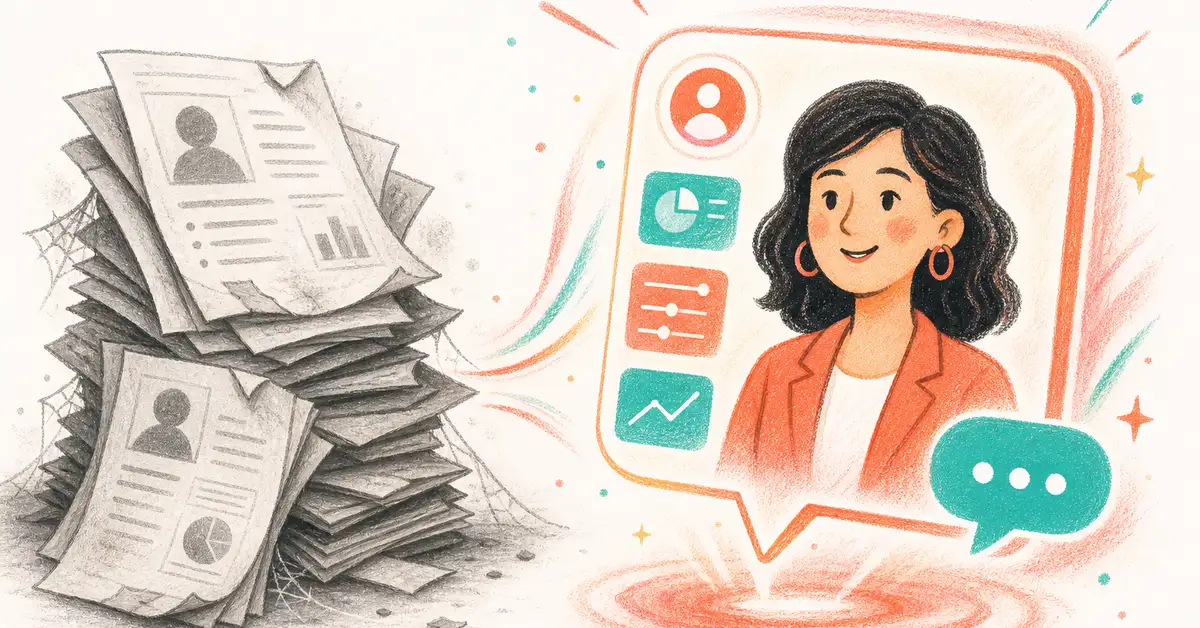
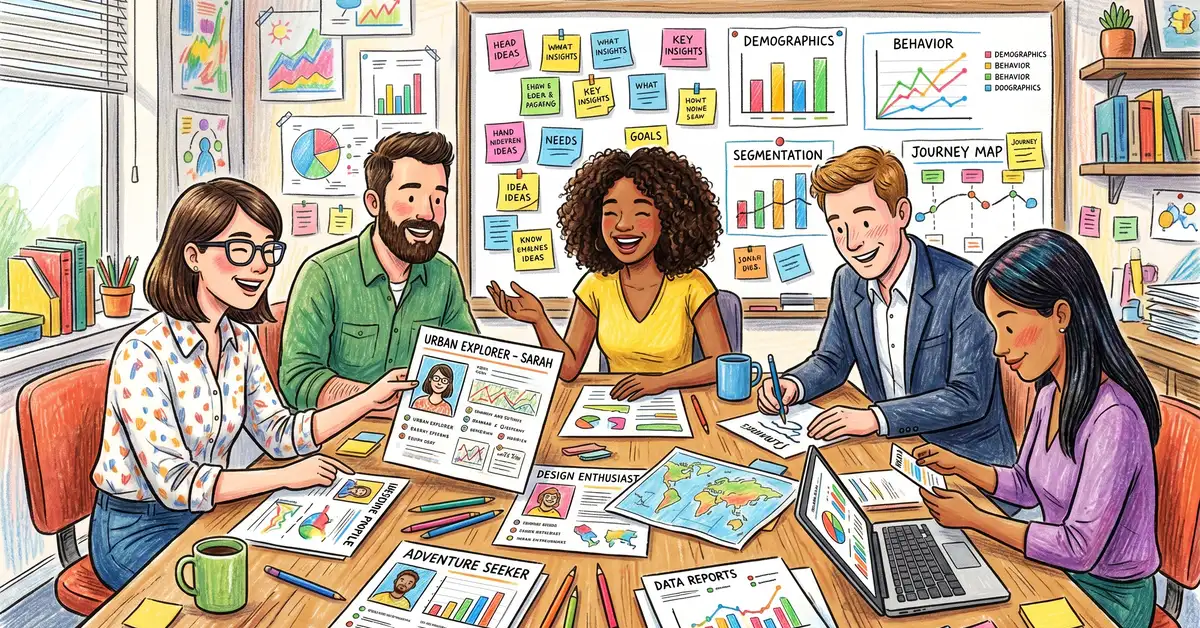
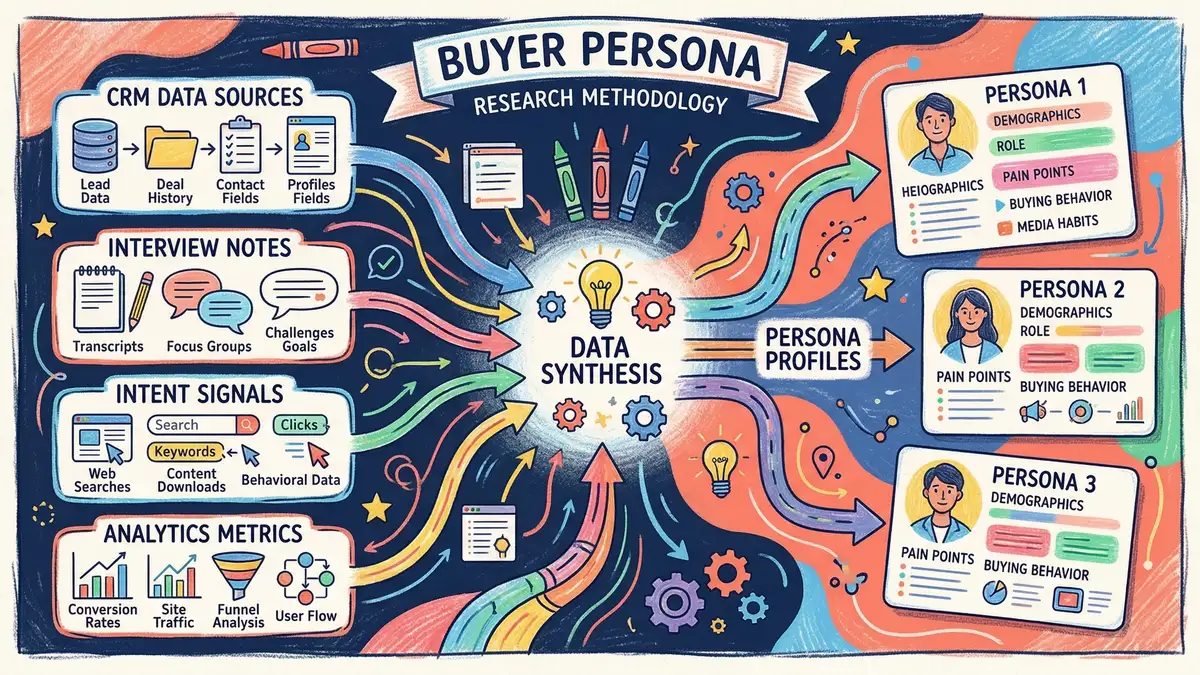
<h1>How to Create a Buyer Persona That Actually Converts (2026 Guide)</h1> <p>Your buyer personas are sitting in a Google Drive folder somewhere, gathering digital dust.</p> <p>They're static PDFs from six weeks of interviews and surveys. Nobody's looked at them in months. They don't reflect your actual customers anymore. And worst of all, they're not helping your team convert a single prospect.</p> <p>This is the reality for most marketing teams in 2026.</p> <p>The traditional approach to buyer personas—interviews, surveys, 40–60 hours per persona, six-week turnarounds—is broken. By the time you've finished building a persona, the market has shifted. Your customer's pain points have changed. Your competitors have moved.</p> <p>But there's a better way.</p> <p>Personas don't have to be static documents. They can be living, breathing representations of your buyers—validated in real-time, updated constantly, and integrated directly into your marketing and sales workflows. This guide shows you exactly how to create buyer personas that actually convert, using modern research methods, AI-powered validation, and real-time interaction tools.</p> <p>Let's start with the business case.</p> <div style="background-color:#FFF5F3;border-left:4px solid #F4785C;padding:20px 24px;margin:2rem 0;border-radius:4px;"> <div style="font-family:Montserrat,sans-serif;font-size:24px;font-weight:700;color:#002D49;margin-bottom:8px;">71% of companies exceeding revenue goals maintain documented buyer personas</div> <div style="font-family:'Golos Text',sans-serif;font-size:14px;color:#666666;">Versus 29% relying on assumptions or luck</div> </div> <h2>The Hidden Cost of Guessing Wrong</h2> <p>Without personas, marketing teams operate on instinct. They send the wrong message to the wrong people at the wrong time. Sales misses signals because they don't know what matters to their buyers. Product teams build features nobody asked for.</p> <p>The result? Wasted budget. Lower conversion rates. Longer sales cycles. Higher customer acquisition costs.</p> <p>The numbers tell the story:</p> <ul> <li><strong>Personalization improves landing page conversions by up to 202%.</strong> But personalisation without buyer insight is just guessing.</li> <li><strong>72% of purchasing decisions hinge on personalised, timely insights.</strong> Yet most teams don't have structured ways to deliver those insights at scale.</li> <li><strong>Persona-driven CRO achieves 223% average ROI.</strong> Compare that to campaigns without persona alignment—they're leaving money on the table.</li> <li><strong>Top CRO budget allocators see 4x higher conversion lifts.</strong> But CRO only works when you know who you're optimising for.</li> </ul> <p>Here's the deeper problem: traditional personas become outdated the moment they're finished. Market conditions shift. Buyer priorities change. Competitive landscapes evolve. Your PDF persona from six weeks ago doesn't reflect reality anymore.</p> <p>That's why leading B2B SaaS teams have stopped creating static personas and started building dynamic ones—buyer personas they can validate, test, and refine in real-time.</p> <div style="background-color:#FFF5F3;border-left:6px solid #F4785C;padding:20px 24px;margin:2rem 0;border-radius:4px;"> <div style="font-family:Montserrat,sans-serif;font-size:18px;font-weight:700;color:#002D49;margin-bottom:12px;">Key Insight</div> <div style="font-family:'Golos Text',sans-serif;font-size:15px;color:#444444;line-height:1.6;">The persona you built three months ago is not your persona today. Buyer pain points evolve, markets shift, and competitive dynamics change. Static personas go stale. Real-time personas keep you ahead.</div> </div> <h2>What Is a Buyer Persona? (And Why the Definition Has Changed)</h2> <p>A buyer persona is a semi-fictional representation of your ideal customer—built on real data, not assumptions. It includes demographics (job title, company size, industry), psychographics (values, motivations, fears), and behaviours (how they research, what they care about, how they buy).</p> <p>But here's what's changed in 2026: personas are no longer just marketing artefacts. They're operational documents. Sales teams use them to qualify leads. Product teams use them to prioritise features. Customer success teams use them to onboard the right segments. Marketing uses them to target, personalise, and measure.</p> <p>The definition has evolved from "a document that sits in a folder" to "a living profile integrated into your entire revenue machine."</p> <p>And the best-performing teams? They're doing something revolutionary: they're using AI to create interactive buyer personas—virtual representations they can have live conversations with, test messaging against, and validate assumptions instantly.</p> <p>That's the future of personas. And it's available now.</p> <div style="background-color:#FFF5F3;border-left:6px solid #F4785C;padding:20px 24px;margin:2rem 0;border-radius:4px;"> <div style="font-family:Montserrat,sans-serif;font-size:18px;font-weight:700;color:#002D49;margin-bottom:12px;">The Persona Evolution: Then vs Now</div> <div style="font-family:'Golos Text',sans-serif;font-size:14px;color:#444444;line-height:1.6;"> <p style="margin:0 0 8px 0;"><strong>Old Approach (2020–2023):</strong> Static PDFs, survey-based, 6-week turnaround, minimal updates, siloed across teams.</p> <p style="margin:0;"><strong>New Approach (2024–2026):</strong> Dynamic profiles, data-driven (CRM + intent + analytics), real-time updates, integrated into workflow, testable and interactive.</p> </div> </div> <h2>How to Create a Buyer Persona in 2026: The Step-by-Step Framework</h2> <p>Creating a persona that actually converts requires four phases: research, template, validation, and iteration. Most teams skip some of these. The top performers nail all four.</p> <h3>Phase 1: Research (The Foundation)</h3> <p>You can't build an accurate persona without data. Here's where to look:</p> <ul> <li><strong>Your CRM and sales data.</strong> Who have you already won? What do they have in common? What's their company size, industry, role, budget, use case? Your CRM is your richest source of truth.</li> <li><strong>Customer interviews and win/loss calls.</strong> Talk to your best customers. Ask why they bought. Ask what problem you solved. Talk to customers you lost. Ask why they didn't buy. (This is where most personas fail—teams skip the "why" and focus only on demographics.)</li> <li><strong>Intent and behavioural data.</strong> What content do prospects engage with before buying? What keywords do they search? What conversation topics trigger buying signals? Tools like LinkedIn, Clearbit, ZoomInfo, and your web analytics reveal this.</li> <li><strong>Analytics and web behaviour.</strong> Which pages do your best leads visit? In what order? How long do they stay? What's their funnel path from first visit to conversion? This tells you where their attention is.</li> <li><strong>Support and product feedback.</strong> What problems are customers hitting post-sale? What features do they ask for most? What's causing friction? This reveals hidden pain points.</li> </ul> <p>Pro tip: Gather qualitative and quantitative data. Interviews tell you "why" (motivation). CRM data tells you "who" (demographics). Web analytics tells you "how" (behaviour). You need all three.</p> <div style="margin:2rem 0;border-collapse:collapse;font-family:'Golos Text',sans-serif;font-size:14px;"> <table style="width:100%;border-collapse:collapse;border:1px solid #e2e8f0;"> <thead> <tr style="background-color:#002D49;"> <th style="padding:16px;text-align:left;color:white;font-weight:700;border:1px solid #e2e8f0;">Data Source</th> <th style="padding:16px;text-align:left;color:white;font-weight:700;border:1px solid #e2e8f0;">What It Reveals</th> <th style="padding:16px;text-align:left;color:white;font-weight:700;border:1px solid #e2e8f0;">Effort Level</th> </tr> </thead> <tbody> <tr style="background-color:#f8fafc;border:1px solid #e2e8f0;"> <td style="padding:14px 16px;border:1px solid #e2e8f0;"><strong>CRM + Sales Data</strong></td> <td style="padding:14px 16px;border:1px solid #e2e8f0;">Demographics, company size, industry, decision criteria, buying patterns</td> <td style="padding:14px 16px;border:1px solid #e2e8f0;">Low</td> </tr> <tr style="background-color:#white;border:1px solid #e2e8f0;"> <td style="padding:14px 16px;border:1px solid #e2e8f0;"><strong>Customer Interviews (15–20)</strong></td> <td style="padding:14px 16px;border:1px solid #e2e8f0;">Motivation, pain points, decision journey, objections overcome, success metrics</td> <td style="padding:14px 16px;border:1px solid #e2e8f0;">High</td> </tr> <tr style="background-color:#f8fafc;border:1px solid #e2e8f0;"> <td style="padding:14px 16px;border:1px solid #e2e8f0;"><strong>Win/Loss Analysis</strong></td> <td style="padding:14px 16px;border:1px solid #e2e8f0;">Why customers chose you vs competitors, what almost killed deals</td> <td style="padding:14px 16px;border:1px solid #e2e8f0;">Medium</td> </tr> <tr style="background-color:#white;border:1px solid #e2e8f0;"> <td style="padding:14px 16px;border:1px solid #e2e8f0;"><strong>Web & Intent Data</strong></td> <td style="padding:14px 16px;border:1px solid #e2e8f0;">Search intent, content engagement, awareness stage signals, high-intent keywords</td> <td style="padding:14px 16px;border:1px solid #e2e8f0;">Low–Medium</td> </tr> <tr style="background-color:#f8fafc;border:1px solid #e2e8f0;"> <td style="padding:14px 16px;border:1px solid #e2e8f0;"><strong>Support Tickets & Feedback</strong></td> <td style="padding:14px 16px;border:1px solid #e2e8f0;">Post-sale pain points, feature requests, integration challenges</td> <td style="padding:14px 16px;border:1px solid #e2e8f0;">Low</td> </tr> </tbody> </table> </div> <h3>Phase 2: Build Your Persona Template</h3> <p>Once you have data, structure it into a template. Here's what each persona should include:</p> <div style="background-color:#f8fafc;border:1px solid #e2e8f0;padding:20px 24px;margin:2rem 0;border-radius:4px;"> <div style="font-family:Montserrat,sans-serif;font-size:16px;font-weight:700;color:#002D49;margin-bottom:14px;">Persona Template Checklist</div> <div style="font-family:'Golos Text',sans-serif;font-size:14px;color:#444444;"> <p style="margin-bottom:12px;"><strong>Demographics:</strong> Name, job title, seniority, company size, industry, years in role, education</p> <p style="margin-bottom:12px;"><strong>Psychographics:</strong> Values, priorities, fears, ambitions, communication style, learning preferences</p> <p style="margin-bottom:12px;"><strong>Behaviours:</strong> How they research (Google, LinkedIn, peer networks), where they get information, what content they engage with, purchase frequency</p> <p style="margin-bottom:12px;"><strong>Goals & KPIs:</strong> What success looks like for them, what they measure, what their boss cares about</p> <p style="margin-bottom:12px;"><strong>Pain Points:</strong> What keeps them awake at night, what problems are costing them money, what's frustrating them now</p> <p style="margin-bottom:12px;"><strong>Objections & Concerns:</strong> Why might they say no? What risks are they worried about? What alternative solutions are they considering?</p> <p style="margin-bottom:0;"><strong>Buying Process:</strong> How long does the decision take? How many stakeholders are involved? What's the approval process?</p> </div> </div> <p>The key: don't go too deep at this stage. You'll refine personas through validation. Start with 3–5 core personas that represent your addressable market. Don't create 15 personas. Nobody uses them.</p> <h3>Phase 3: Validate Your Personas (The Make-or-Break Phase)</h3> <p>This is where most teams fail. They build personas and assume they're right. They're not.</p> <p>Validation means testing your personas against real-world behaviour. Here's how:</p> <ul> <li><strong>Test messaging.</strong> Does the messaging that resonates with Persona A actually work? Create landing page variants with messaging tailored to each persona. Run A/B tests. Measure which persona messaging converts best. The personas that convert highest are your true personas.</li> <li><strong>Test email subject lines.</strong> What subject lines does each persona respond to? Higher open rate for IT Director emails vs Finance Manager emails? Your personas are different. Adjust accordingly.</li> <li><strong>Measure sales cycle impact.</strong> Do deals with Persona A close faster than Persona B? Do they have higher win rates? Higher deal size? Personas that correlate with faster, bigger, higher-win-rate deals are your best personas.</li> <li><strong>Get feedback from your sales team.</strong> Do your sales reps recognise these personas? Do they match the prospects they're actually talking to? If not, adjust. Sales is the truth.</li> <li><strong>Use interactive AI personas.</strong> Test messaging, value propositions, and email copy against a virtual buyer persona powered by real buyer data. Does your messaging land? Get instant feedback and iterate.</li> </ul> <p>This is the edge modern teams have: they can test and validate personas in weeks instead of months. AI-powered interactive personas let you have real conversations with a simulation of your buyer—and refine your approach based on their reactions.</p> <h3>Phase 4: Iterate & Update Quarterly</h3> <p>Personas aren't finished documents. They're living profiles.</p> <p>Every quarter (or every six months at minimum):</p> <ul> <li>Review new CRM data. Have customer profiles shifted?</li> <li>Analyse conversion data. Which personas drove the most pipeline? Revenue? Highest win rates?</li> <li>Interview new customers. What's changed in their decision-making? Their pain points?</li> <li>Check market shifts. Are competitors moving? Are buying criteria changing?</li> <li>Update persona data. Refresh demographics, pain points, buying timelines based on what you've learned.</li> </ul> <p>Teams that update personas quarterly stay ahead. Teams that build personas once and never touch them again get left behind.</p> <div style="background-color:#fef3c7;border-left:4px solid #d97706;padding:20px 24px;margin:2rem 0;border-radius:4px;"> <div style="font-family:Montserrat,sans-serif;font-size:16px;font-weight:700;color:#92400e;margin-bottom:8px;">Warning: The "Perfect Persona" Trap</div> <div style="font-family:'Golos Text',sans-serif;font-size:14px;color:#444444;">Don't get bogged down perfecting a single persona. Build 3–5 good personas quickly. Validate them. Iterate. Done is better than perfect. A rough persona you can test beats a perfect persona you'll never use.</div> </div> <h2>The ROI of Getting Personas Right</h2> <p>Here's what happens when you nail your personas:</p> <ul> <li><strong>Conversion rates skyrocket.</strong> Persona-driven personalization lifts landing page conversions by up to 202%. Email conversions hit 16.9% (compared to 2–4% for untargeted campaigns).</li> <li><strong>Sales velocity improves.</strong> Persona-based ICP targeting raises lead-to-opportunity conversion from 10–15% baseline to much higher. Deals close faster because you're talking to the right people with the right message.</li> <li><strong>CAC drops.</strong> When you know exactly who you're targeting, you waste less budget on the wrong people. Better targeting = lower customer acquisition cost.</li> <li><strong>Revenue per persona grows.</strong> Persona-informed marketers are 3.5x more likely to report revenue growth. Persona-driven campaigns generate consistent, repeatable revenue.</li> <li><strong>Your whole team aligns.</strong> Sales knows who to pursue. Marketing knows what to say. Product knows who to build for. That alignment is worth millions.</li> </ul> <div style="background-color:#FFF5F3;border-left:4px solid #F4785C;padding:24px;margin:2rem 0;border-radius:4px;"> <div style="display:grid;grid-template-columns:1fr 1fr;gap:24px;"> <div> <div style="font-family:Montserrat,sans-serif;font-size:28px;font-weight:700;color:#F4785C;">223%</div> <div style="font-family:'Golos Text',sans-serif;font-size:13px;color:#666666;">Average ROI from persona-driven CRO programs</div> </div> <div> <div style="font-family:Montserrat,sans-serif;font-size:28px;font-weight:700;color:#F4785C;">202%</div> <div style="font-family:'Golos Text',sans-serif;font-size:13px;color:#666666;">Landing page conversion lift from personalization</div> </div> <div> <div style="font-family:Montserrat,sans-serif;font-size:28px;font-weight:700;color:#F4785C;">16.9%</div> <div style="font-family:'Golos Text',sans-serif;font-size:13px;color:#666666;">Email conversion rate (persona-targeted)</div> </div> <div> <div style="font-family:Montserrat,sans-serif;font-size:28px;font-weight:700;color:#F4785C;">3.5x</div> <div style="font-family:'Golos Text',sans-serif;font-size:13px;color:#666666;">Likelihood of revenue growth (persona-informed teams)</div> </div> </div> </div> <h2>Common Persona Mistakes (And How to Avoid Them)</h2> <div style="margin:2rem 0;border-collapse:collapse;font-family:'Golos Text',sans-serif;font-size:14px;"> <table style="width:100%;border-collapse:collapse;border:1px solid #e2e8f0;"> <thead> <tr style="background-color:#002D49;"> <th style="padding:16px;text-align:left;color:white;font-weight:700;border:1px solid #e2e8f0;">Mistake</th> <th style="padding:16px;text-align:left;color:white;font-weight:700;border:1px solid #e2e8f0;">Why It Fails</th> <th style="padding:16px;text-align:left;color:white;font-weight:700;border:1px solid #e2e8f0;">The Fix</th> </tr> </thead> <tbody> <tr style="background-color:#f8fafc;border:1px solid #e2e8f0;"> <td style="padding:14px 16px;border:1px solid #e2e8f0;"><strong>Too many personas (15+)</strong></td> <td style="padding:14px 16px;border:1px solid #e2e8f0;">Nobody remembers them. Teams don't use them. They get abandoned.</td> <td style="padding:14px 16px;border:1px solid #e2e8f0;">Build 3–5 personas maximum. Start tight. Expand only if you prove differentiation.</td> </tr> <tr style="background-color:#white;border:1px solid #e2e8f0;"> <td style="padding:14px 16px;border:1px solid #e2e8f0;"><strong>Based on assumptions, not data</strong></td> <td style="padding:14px 16px;border:1px solid #e2e8f0;">Personas built on "we think" fail. They don't match reality. Messaging misses. Conversions tank.</td> <td style="padding:14px 16px;border:1px solid #e2e8f0;">Ground every persona in CRM data, interviews, and sales feedback. "We know because we checked" beats "we think."</td> </tr> <tr style="background-color:#f8fafc;border:1px solid #e2e8f0;"> <td style="padding:14px 16px;border:1px solid #e2e8f0;"><strong>No validation or testing</strong></td> <td style="padding:14px 16px;border:1px solid #e2e8f0;">Personas that haven't been validated against real conversions are guesses. You don't know if they work.</td> <td style="padding:14px 16px;border:1px solid #e2e8f0;">A/B test messaging by persona. Measure conversion lift. Iterate. Validate = confidence.</td> </tr> <tr style="background-color:#white;border:1px solid #e2e8f0;"> <td style="padding:14px 16px;border:1px solid #e2e8f0;"><strong>Never updated after creation</strong></td> <td style="padding:14px 16px;border:1px solid #e2e8f0;">Markets shift. Buyer priorities change. A persona from 2024 doesn't reflect 2026 reality.</td> <td style="padding:14px 16px;border:1px solid #e2e8f0;">Update quarterly. Review CRM data, new customer feedback, market shifts. Personas are living documents.</td> </tr> <tr style="background-color:#f8fafc;border:1px solid #e2e8f0;"> <td style="padding:14px 16px;border:1px solid #e2e8f0;"><strong>Not integrated into workflows</strong></td> <td style="padding:14px 16px;border:1px solid #e2e8f0;">Personas sit in a folder. Nobody uses them. Marketing, sales, and product are all working in silos.</td> <td style="padding:14px 16px;border:1px solid #e2e8f0;">Integrate personas into your CRM. Tag leads by persona. Use persona targeting in ad tools. Make personas operational.</td> </tr> </tbody> </table> </div> <h2>The Future of Personas: Real-Time Interaction</h2> <p>Here's what's changing in 2026: the best teams aren't just building static personas anymore. They're building interactive ones.</p> <p>Interactive personas powered by AI let you have live conversations with a virtual buyer—trained on your real customer data. You can test messaging, value propositions, and email copy instantly. Get feedback. Iterate. Validate assumptions without waiting weeks for A/B test results.</p> <p>This is a game-changer because:</p> <ul> <li><strong>Speed:</strong> You validate ideas in hours, not weeks.</li> <li><strong>Data-driven:</strong> Every conversation is grounded in real buyer behaviour.</li> <li><strong>Repeatability:</strong> You can test the same messaging across multiple personas at scale.</li> <li><strong>Learning:</strong> Each conversation reveals insights about what resonates and what doesn't.</li> </ul> <p>Teams using interactive personas are seeing 6–27x higher conversion rates from persona-tested campaigns compared to untested messaging. That's not a small difference. That's transformational.</p> <p>90% of B2B buyers now use generative AI in their pre-sales research. Your personas need to keep up. Static PDFs won't cut it anymore.</p> <h2>FAQ: Buyer Personas</h2> <div style="margin:2rem 0;"> <div style="background-color:#f8fafc;border:1px solid #e2e8f0;padding:20px;margin-bottom:16px;border-radius:4px;"> <div style="font-family:Montserrat,sans-serif;font-size:15px;font-weight:700;color:#002D49;margin-bottom:8px;">Q: How many personas do I need?</div> <div style="font-family:'Golos Text',sans-serif;font-size:14px;color:#444444;">A: Start with 3–5. More than 5 and nobody remembers them. Fewer than 3 and you're missing important market segments. Pick personas that represent 80% of your revenue opportunity.</div> </div> <div style="background-color:#f8fafc;border:1px solid #e2e8f0;padding:20px;margin-bottom:16px;border-radius:4px;"> <div style="font-family:Montserrat,sans-serif;font-size:15px;font-weight:700;color:#002D49;margin-bottom:8px;">Q: How often should I update personas?</div> <div style="font-family:'Golos Text',sans-serif;font-size:14px;color:#444444;">A: Quarterly at minimum. Review new customer data, check if conversion patterns have shifted, interview recent customers, and update pain points and priorities. Personas that aren't updated become outdated fast.</div> </div> <div style="background-color:#f8fafc;border:1px solid #e2e8f0;padding:20px;margin-bottom:16px;border-radius:4px;"> <div style="font-family:Montserrat,sans-serif;font-size:15px;font-weight:700;color:#002D49;margin-bottom:8px;">Q: How do I know if my personas are working?</div> <div style="font-family:'Golos Text',sans-serif;font-size:14px;color:#444444;">A: Track three metrics: (1) Conversion lift from persona-targeted campaigns vs generic campaigns. (2) Sales cycle length by persona—which personas close fastest? (3) Win rate by persona—which personas buy most reliably? Personas that drive high conversion, fast cycle, and high win rate are your winners.</div> </div> <div style="background-color:#f8fafc;border:1px solid #e2e8f0;padding:20px;margin-bottom:16px;border-radius:4px;"> <div style="font-family:Montserrat,sans-serif;font-size:15px;font-weight:700;color:#002D49;margin-bottom:8px;">Q: Should I involve sales in persona creation?</div> <div style="font-family:'Golos Text',sans-serif;font-size:14px;color:#444444;">A: Absolutely. Sales spends the most time talking to prospects. They know what questions buyers ask, what objections come up, what buying timelines look like. Sales input transforms personas from marketing guesses into operational truth.</div> </div> <div style="background-color:#f8fafc;border:1px solid #e2e8f0;padding:20px;margin-bottom:16px;border-radius:4px;"> <div style="font-family:Montserrat,sans-serif;font-size:15px;font-weight:700;color:#002D49;margin-bottom:8px;">Q: Can I use personas with AI marketing tools?</div> <div style="font-family:'Golos Text',sans-serif;font-size:14px;color:#444444;">A: Yes. In fact, modern AI marketing tools work much better with clear personas. You can feed personas into content generators (they'll tailor messaging), use them to guide ad targeting, and integrate them into your marketing automation workflows. Personas + AI = alignment at scale.</div> </div> <div style="background-color:#f8fafc;border:1px solid #e2e8f0;padding:20px;margin-bottom:16px;border-radius:4px;"> <div style="font-family:Montserrat,sans-serif;font-size:15px;font-weight:700;color:#002D49;margin-bottom:8px;">Q: What's the difference between a persona and an ICP?</div> <div style="font-family:'Golos Text',sans-serif;font-size:14px;color:#444444;">A: A persona is a person (job title, motivations, pain points). An ICP (Ideal Customer Profile) is a company (industry, size, revenue, location). You need both. ICPs tell you which companies to target. Personas tell you which roles within those companies matter most and how to reach them.</div> </div> <div style="background-color:#f8fafc;border:1px solid #e2e8f0;padding:20px;margin-bottom:16px;border-radius:4px;"> <div style="font-family:Montserrat,sans-serif;font-size:15px;font-weight:700;color:#002D49;margin-bottom:8px;">Q: How do I prevent personas from becoming a "nice-to-have" instead of operational?</div> <div style="font-family:'Golos Text',sans-serif;font-size:14px;color:#444444;">A: Make them mandatory. Tag leads and accounts by persona in your CRM. Use persona data in your marketing automation. Measure conversion and revenue by persona. Share persona insights regularly with the team. When personas drive decisions and measure success, they stop being artefacts and become operational.</div> </div> </div> <h2>The Bottom Line: Stop Guessing. Know Your Buyers.</h2> <p>Personas built on data, validated through testing, and updated quarterly unlock conversion lifts of 200%+, faster sales cycles, and revenue growth that compounds.</p> <p>But static personas—PDF documents gathering dust in a Google Drive—are worth almost nothing.</p> <p>The teams winning in 2026 aren't just building personas. They're building living, breathing, dynamic representations of their buyers. They're validating them constantly. They're using them to drive every marketing, sales, and product decision. And they're seeing the results: higher conversions, faster deals, better revenue.</p> <p>Start today. Pick your three core personas. Gather data. Validate them. Make them operational. Update them quarterly.</p> <p>Your buyers will thank you. Your revenue will thank you even more.</p> <div style="background: linear-gradient(135deg, #F4785C 0%, #002D49 100%);padding:48px 32px;margin:3rem 0;border-radius:8px;text-align:center;color:white;"> <div style="font-family:Montserrat,sans-serif;font-size:28px;font-weight:700;margin-bottom:12px;">Stop Guessing. Talk to Your Buyer Persona in Real-Time</div> <div style="font-family:'Golos Text',sans-serif;font-size:16px;margin-bottom:24px;line-height:1.6;">Marketing Mary's AI Co-Pilot lets you have live conversations with interactive buyer personas—trained on your real customer data. Test messaging. Validate assumptions. Get answers in hours, not weeks.</div> <a href="/join-our-waitlist" style="display:inline-block;background-color:#ffffff;color:#002D49;font-family:Montserrat,sans-serif;font-weight:700;padding:14px 32px;border-radius:4px;text-decoration:none;font-size:15px;">Join 500+ Marketing Leaders on the Waitlist</a> </div> <div style="border-top:1px solid #CCCCCC;padding-top:24px;margin-top:3rem;"> <div style="font-family:'Golos Text',sans-serif;font-size:13px;color:#999999;margin-bottom:12px;"><strong>Sources & References</strong></div> <div style="font-family:'Golos Text',sans-serif;font-size:13px;color:#999999;line-height:1.8;"> <p style="margin:0 0 8px 0;">• Martal (2026). <a href="https://martal.ca/b2b-digital-marketing-benchmarks-lb/" rel="noopener" target="_blank" style="color:#00A4BD;">B2B Digital Marketing Benchmarks 2026</a></p> <p style="margin:0 0 8px 0;">• GTM 8020 (2026). <a href="https://www.gtm8020.com/blog/saas-conversion-rate-optimization-statistics" rel="noopener" target="_blank" style="color:#00A4BD;">SaaS Conversion Rate Optimization Statistics</a></p> <p style="margin:0 0 8px 0;">• Position Digital (2026). <a href="https://www.position.digital/blog/saas-marketing-statistics/" rel="noopener" target="_blank" style="color:#00A4BD;">30+ SaaS Marketing Statistics & Trends for 2026</a></p> <p style="margin:0 0 8px 0;">• ContentBeta (2026). <a href="https://www.contentbeta.com/blog/b2b-saas-marketing/" rel="noopener" target="_blank" style="color:#00A4BD;">B2B SaaS Marketing: The Ultimate Guide for the AI Era</a></p> <p style="margin:0 0 8px 0;">• Hyperbound (2026). <a href="https://www.hyperbound.ai/blog/revenue-activation-report-2026" rel="noopener" target="_blank" style="color:#00A4BD;">Revenue Activation Report 2026</a></p> <p style="margin:0;">• Verified.Email (2026). <a href="https://verified.email/blog/email-marketing/b2b-statistics-benchmarks-forecast-2026-2030" rel="noopener" target="_blank" style="color:#00A4BD;">B2B Email Marketing Benchmarks 2025–2030</a></p> </div> </div>

How to Create a Buyer Persona That Actually Converts (2026 Guide)

How to Create a Buyer Persona That Actually Converts (2026 Guide) Your buyer personas are sitting in a Google Drive folder somewhere,...

Read More
DIY Marketing Mastery: How AI Eliminates the Need for Big Agencies

DIY Marketing Mastery: How AI Eliminates the Need for Big Agencies

Introduction: Imagine outperforming a top marketing agency with just your laptop and AI. Welcome to the era of 'Better, Faster, Cheaper' marketing....

Read More
Unleashing the Power of AI: Opportunities and Challenges in the Next Platform Shift

Unleashing the Power of AI: Opportunities and Challenges in the Next Platform Shift

Contents 1. The Transformative Potential of Artificial Intelligence2. AI Models: Surprising Capabilities and Applications3. The Role of AI in...

Read More