
What is an evidence-graded buyer persona?
 Clwyd Probert: Sep 30, 2026, 8:25:00 PM
An evidence-graded buyer persona is a buyer persona in which every claim carries a label saying where it came from: first-party evidence (the...

A buyer persona tool is software that builds, stores, and operationalizes research-based profiles of your ideal customers — the goals, pains, and buying behaviors that should shape every campaign. The best ones in 2026 don't just generate a document; they keep personas live and wired into your CRM and content.
Many buyer personas are abandoned soon after they're made: too static to update, too generic to be useful, locked in a PDF nobody opens. We tested the leading buyer persona tools of 2026 — HubSpot's Make My Persona AI, Delve AI, UXPressia, Mnemonic AI, Crystal Knows and the newer AI personas you can put questions to — scoring the full field of eight and recommending six by use case, judged on what B2B teams care about: CRM integration, AI research depth, real day-to-day usability, and whether they'd still be in active use six months in. Here's how to create effective buyer personas once you've chosen your tool.
Here's the uncomfortable truth about buyer persona tools: many B2B teams have personas, but far fewer use them across their marketing channels. The rest have created expensive shelf-ware — beautiful documents that satisfy a strategic checkbox without changing how campaigns actually run. The right tool doesn't just create personas; it ensures your team uses them daily in CRM workflows, content creation, and campaign targeting.
53%
SaaS Licenses
Unused in any 30-day period (Zylo)
5-16
People
In a B2B buying group (Gartner, 2025)
Sources: Gartner Sales Survey 2025, Zylo SaaS license data
We evaluated 8 buyer persona platforms across 12 weighted criteria grouped into six categories. Each tool received a score from 1-5 per category, with weightings reflecting what actually drives persona adoption beyond the initial creation phase. This methodology prioritizes operational deployment over creation polish — because a beautiful persona document that sits in Google Drive produces zero revenue impact.
| Evaluation Category | Weight | What We Measured |
|---|---|---|
| AI & Research Depth | 25% | Data source variety, synthetic research capability, AI conversation quality, research automation |
| CRM & Stack Integration | 25% | Native CRM connection, marketing automation sync, bidirectional data flow, API access |
| Workflow Operationalization | 20% | Content creation integration, campaign targeting, sales enablement, automated updates |
| B2B Buying Committee | 15% | Multi-stakeholder support, influence mapping, committee dynamics modeling |
| Collaboration & Governance | 10% | Team access, version control, update workflows, persona adoption tracking |
| Value for Money | 5% | Cost per persona generated, team pricing scalability, ROI payback window |
Why Integration Outweighs Creation Quality
Traditional persona tool reviews weight creation features highest. We deliberately weight integration and operationalization at 45% combined because personas only change campaigns when they are deployed within CRM and automation systems — not when they exist as standalone documents. Personas that nobody updates go stale; tools that automate updates remove the governance failure that kills persona programs.

Here are all 8 tools scored against our weighted evaluation framework. The weighted total reflects how each platform performs for B2B marketing teams managing multi-stakeholder deals with existing marketing technology stacks.
| Tool | AI Research (25%) | Integration (25%) | Workflow (20%) | B2B (15%) | Collab (10%) | Value (5%) | Weighted Total | Price |
|---|---|---|---|---|---|---|---|---|
| Delve AI | 5 | 4 | 3 | 3 | 3 | 4 | 3.95 | From $132/mo |
| SparkToro | 4 | 3 | 3 | 3 | 3 | 3 | 3.40 | From $38/mo |
| HubSpot Make My Persona AI | 3 | 4 | 3 | 2 | 3 | 5 | 3.30 | Free |
| Mnemonic AI | 4 | 3 | 3 | 5 | 3 | 3 | 3.60 | From $350 |
| Xtensio | 2 | 2 | 2 | 2 | 5 | 4 | 2.45 | Free–$12/user/mo |
| UXPressia | 3 | 2 | 2 | 2 | 4 | 4 | 2.55 | From $36/user/mo |
| Crystal Knows | 3 | 4 | 3 | 3 | 2 | 3 | 3.25 | From $49/mo |
| Userforge | 1 | 1 | 1 | 1 | 3 | 5 | 1.50 | Free–$59/mo |
Prices are each vendor's published US starting price, checked Oct 7, 2026 (SparkToro's is billed yearly; Mnemonic AI lists "starting at" prices). Scores are unchanged from our original review.
AI-assisted persona generation has become table-stakes functionality in 2026 — every tool claims AI capabilities. The meaningful differentiator is research depth: does the AI synthesize data from multiple sources to produce validated insights, or does it simply format your manual inputs into a template? Traditional persona development can take weeks of research per persona; AI-assisted research cuts that substantially, which makes persona programs viable for mid-market teams.

Delve AI scores highest here in our matrix. Its Research Synthesis Engine ingests data from Google Analytics, CRM records, customer review sites, and other public sources to generate personas grounded in behavioral data rather than assumptions. The 2025 Digital Twin feature lets you hold a conversation with a persona, though it needs richer underlying data to work well. Sites with low traffic may find Delve AI's output too thin for actionable decision-making.
SparkToro occupies a distinct position as an audience research platform rather than a persona builder. Founded on Rand Fishkin's thesis that personas must start with empirical audience data, SparkToro shows where your target audience spends time online, what content they consume, and what topics they discuss. It doesn't produce persona documents — instead it provides the research foundation that makes persona creation evidence-based rather than assumption-based. Plans start at $38 a month (billed yearly), with Business at $150 a month; it's a research investment, not a persona tool per se.
Integration depth determines whether personas become operational assets or shelf-ware. The critical question isn't "can it export a PDF?" — it's "can it drive CRM segmentation, email personalization, and content targeting automatically?" Personas can sharpen email and content targeting, but only when they live inside your marketing automation, not in a shared drive.

HubSpot Make My Persona AI — relaunched in 2026 with an AI-guided generator — earns 4/5 through native CRM integration: personas map directly to contact records for segmentation, lead scoring, and automated workflows. The limitation is that the persona tool itself is free and basic; the integration value only materializes if you're already paying for HubSpot Marketing Hub Professional (from $800 a month, billed yearly) or Enterprise (from $3,600 a month). For existing HubSpot users, this native integration is a significant advantage over standalone tools.
Crystal Knows scores 4/5 for a different reason: it integrates with CRM systems at the individual contact level rather than the persona segment level. Sales teams access personality profiles directly within Salesforce or HubSpot deal records, personalizing outreach based on the decision-maker's communication style. It's not a traditional persona tool, but for B2B sales teams doing account-based outreach, this individual-level persona data drives measurable improvement in response rates.
Delve AI expanded bidirectional CRM integration during 2025, enabling organizations to map AI-generated personas back to actual customer records. This closes a critical feedback loop: you can verify whether your conceptual personas match your real customer base, identifying gaps that would otherwise go undetected. However, it does little to carry personas into content creation.

Gartner's 2025 sales survey found buying groups ranging from five to 16 people across as many as four functions. Traditional persona tools — designed for single-buyer archetypes — fundamentally fail to capture the intra-committee dynamics, influence patterns, and competing priorities that govern enterprise purchasing decisions.
Mnemonic AI is purpose-built for this challenge. It creates distinct personas for each buying committee stakeholder — the CFO evaluating ROI, the CTO assessing technical risk, the end-user champion advocating from below — then maps influence relationships between them. You can model intra-committee conversations: "If the CTO objects on integration complexity, how does the VP of Marketing counter?" This committee-dynamics modeling is its specialty.
PersonaForce adds a temporal dimension that other tools miss: stakeholder priorities shift throughout extended B2B sales cycles. Early-stage evaluation priorities differ from late-stage procurement concerns. PersonaForce models this evolution, helping teams adjust messaging as deals progress through stages. It's positioned for teams managing complex enterprise deals where individual deal values justify the investment; PersonaForce doesn't publish its prices.
See what Mary finds on your website.
Join the early-adopter list and be one of the first to try Mary on your own website.
Plans from Free to Enterprise · pricing to be confirmed
The most expensive buyer persona is the one you create but never use. Research confirms a consistent pattern: teams invest in creation workshops, export polished documents, share them in kickoff presentations — then watch adoption collapse within weeks as personas become static artifacts disconnected from daily workflows. Across software generally, Zylo's data shows 53% of SaaS licenses go unused in any given 30-day period, and persona tools are prone to the same pattern.
Three systemic failures drive this pattern. First, personas live in shared drives rather than inside CRM and automation platforms — so using them requires conscious effort rather than being embedded in existing workflows. Second, teams aren't trained on how to apply personas in their specific roles — a demand gen manager needs different persona application than a content writer. Third, no governance process exists to refresh personas as markets shift; within 6 months, personas based on 2025 data misrepresent a 2026 market.
The cost most teams miss
Traditional persona development takes weeks of research and interviews for each persona, so a suite of three to five is a real investment. If the personas become shelf-ware, that investment returns nothing. The fix isn't a cheaper persona; it's one the team keeps using because it shows where each claim came from and gets checked on a schedule.
Personas get used when people can see why they should trust them. A persona that says where each claim came from (a customer interview, the company's own website, outside research, or an inference) can be checked, challenged and corrected. One that doesn't is easy to ignore, however polished it looks.
Three habits keep personas out of the shared drive. Label each claim with its source, so the team knows what rests on evidence and what is a guess. Re-check the evidence on a schedule, such as quarterly, and date each change. And show what's out of date, rather than letting old claims sit beside new ones.
Some tools also let you put questions to a persona, such as how it would react to a subject line or an offer. That helps when the answers draw on the same evidence and say what they rest on. For the fuller method, see our guide to the evidence-graded buyer persona.
Static Personas (Generation 1-2)
Created once, exported as PDF. No record of where each claim came from. Typically stale within weeks. Disconnected from CRM and automation.
Evidence-graded personas
Each claim labeled with its source. Re-checked on a schedule, with changes dated. Gaps shown rather than filled. Can be questioned directly, with answers that say what they rest on.
Rather than declaring a single "best" tool, the right choice depends on your specific context. Here's a decision framework based on five common scenarios we see across B2B marketing teams. Who owns persona work matters as much as the tool — see how a modern marketing team structure assigns it.
| Your Situation | Best Tool | Why This Tool Wins Here |
|---|---|---|
| First personas ever | HubSpot Make My Persona | Free, no signup, produces a structured persona in 5 minutes. Creates the foundation before investing in advanced tools. Integrates with HubSpot CRM if you're already in that ecosystem. |
| Data-rich analytics team | Delve AI | Connects to many data sources. Generates personas from actual behavior, not assumptions. Digital Twin enables conversation. Needs meaningful site traffic for useful output. |
| Enterprise buying committees | Mnemonic AI | Multi-stakeholder modeling, influence mapping, committee dynamics. Mnemonic AI specializes here. |
| Agency managing 10+ clients | Xtensio | Xtensio for branded, client-ready deliverables with engagement analytics. |
| UX/product team | UXPressia | Combines persona creation with journey mapping, impact mapping, and CX design. Built for research-driven teams mapping full customer experiences, not just marketing segments. |
| Sales personalization | Crystal Knows | Individual personality profiling from digital footprints. Integrates with CRM at the contact level for outreach personalization. Not a traditional persona tool but solves the sales enablement use case. |
Budget decisions should be grounded in expected return, not just tool cost. Personas only pay back when they are put to work in campaigns, sales conversations and content. The question isn't whether personas can generate ROI — it's whether your tool enables the operationalization that produces it.
Free
HubSpot Make My Persona, and Userforge's free plan. Best for: teams creating first personas, validating whether persona-driven marketing fits their process before investing.
Under $50 a month
Xtensio (from $12 per user), UXPressia (from $36 per user), SparkToro (from $38, billed yearly), Crystal Knows (from $49). Best for: established teams needing collaboration, audience research or sales personalization beyond basic templates.
$100 a month and up
Delve AI (from $132), Mnemonic AI (from $350). PersonaForce doesn't publish prices. Best for: teams with complex buying committees, large deal values, or deep research requirements.
The false economy is choosing a free tool that creates personas nobody uses — because the cost isn't the tool subscription, it's the wasted hours creating content and campaigns that don't resonate because they're not grounded in validated persona intelligence.
What is the best free buyer persona tool?
HubSpot Make My Persona is the best free option — no signup required, AI-guided wizard, produces a structured persona in under five minutes. It integrates natively with HubSpot CRM for segmentation and targeting. The limitation is that it creates static documents that don't update or integrate with non-HubSpot tools. For free persona storage, Userforge provides a collaborative repository for teams that have already conducted their research.
How many buyer personas should a B2B company have?
Most B2B organizations benefit from 3-5 primary personas covering most of their revenue. More than 7 dilutes focus and hinders team adoption. However, for enterprise B2B, where Gartner found buying groups ranging from five to 16 people, you need personas for each role in the committee — not just the primary buyer. A B2B SaaS company might have 4 buyer personas but 12-15 committee role personas across those segments.
What is the difference between static and interactive buyer personas?
A static persona is a document (PDF, slide) created from research, shared once, and archived. It goes stale quickly and provides no mechanism to test messaging or validate assumptions. An interactive persona is an AI-powered model you can question — ask "Would you respond to this subject line?" and get an answer. How far you can trust that answer depends on the evidence behind the persona, so check whether the tool shows where each claim came from and how it fits into your marketing workflows.
Can AI-generated personas replace customer interviews?
Not entirely — but they can reduce how many interviews you need. AI-generated personas excel at synthesizing market-level patterns from public data, industry reports, and CRM records. They often miss edge cases, minority perspectives, and idiosyncratic customer contexts that interviews capture. The recommended approach is hybrid: AI generates initial personas, targeted interviews with 8-10 customers per persona validate and refine them. This delivers comparable accuracy at a fraction of traditional research cost and timeline.
Which buyer persona tool integrates best with HubSpot?
HubSpot Make My Persona has the deepest native integration — personas map directly to CRM contacts for segmentation, lead scoring, and automation. Delve AI offers bidirectional HubSpot sync for persona validation against actual customer data. For teams already on HubSpot Marketing Hub Professional or Enterprise, native persona functionality may be sufficient; for teams that need AI-driven research, compare the dedicated tools above on how they connect to HubSpot.
How often should buyer personas be updated?
At minimum quarterly. Markets shift, competitors launch, customer priorities evolve. Static personas based on 2025 research misrepresent 2026 reality. Personas stay useful when each claim shows where it came from and is checked again on a schedule, so the team can see what's still current. If using static tools, build a quarterly review process triggered by sales cycle feedback or campaign performance drops.
See what Mary finds on your website.
Join the early-adopter list and be one of the first to try Mary on your own website.
Plans from Free to Enterprise · pricing to be confirmed
Clwyd Probert
Founder, Marketing Mary
Clwyd Probert is the founder of Marketing Mary, an evidence-first persona intelligence platform for B2B marketing, and CEO of Whitehat, a London-based SEO and inbound marketing agency and HubSpot Diamond Solutions Partner.
Sources: Gartner Sales Survey 2025, Zylo SaaS license data, HubSpot Make My Persona, Delve AI, SparkToro, Xtensio, UXPressia, Mnemonic AI, Crystal Knows Download our free buyer persona templates Build a marketing plan around your personas
Where Marketing Mary fits
We make Marketing Mary, so it isn't scored here. It builds buyer personas from a company's website and labels every claim with where it came from: stated on your website, worked out from your website, corrected or added by your team, or inferred. Each persona shows its evidence mix, and you can talk to it. Pricing is to be confirmed.
See how Marketing Mary builds personas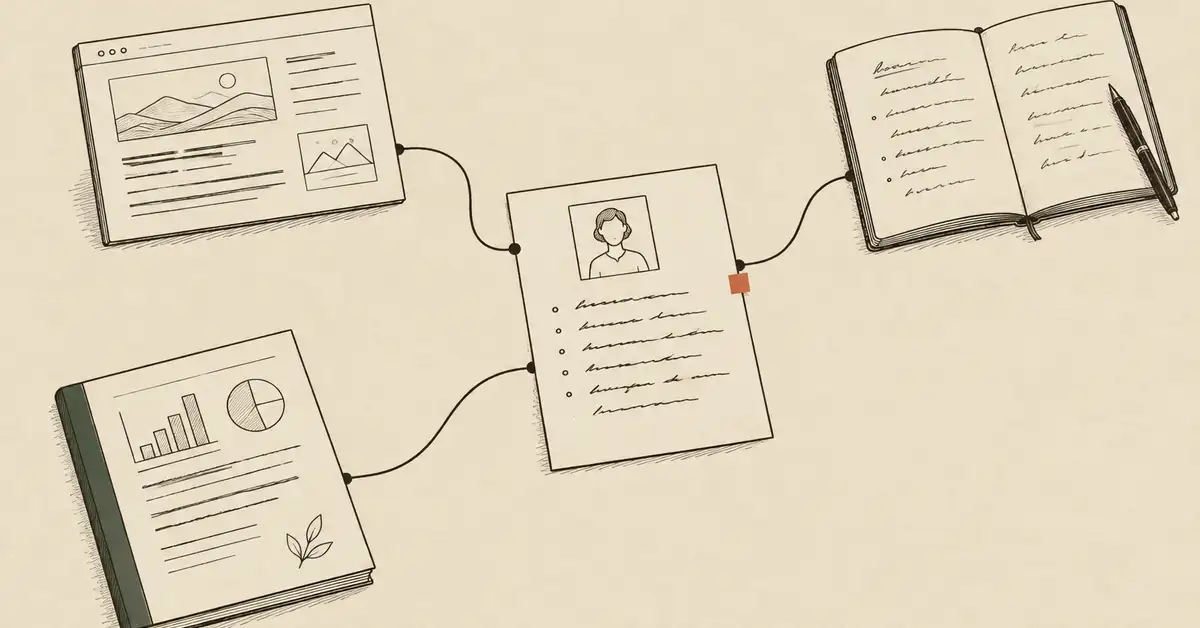 Clwyd Probert: Sep 30, 2026, 8:25:00 PM
An evidence-graded buyer persona is a buyer persona in which every claim carries a label saying where it came from: first-party evidence (the...
 Clwyd Probert: Sep 9, 2026, 11:58:11 PM
Our own Search Console tells this story: impressions up 53% and clicks down 6% in the 28 days to September 6, 2026, compared with the 28 days before,...
 Clwyd Probert: Aug 25, 2026, 10:16:09 AM
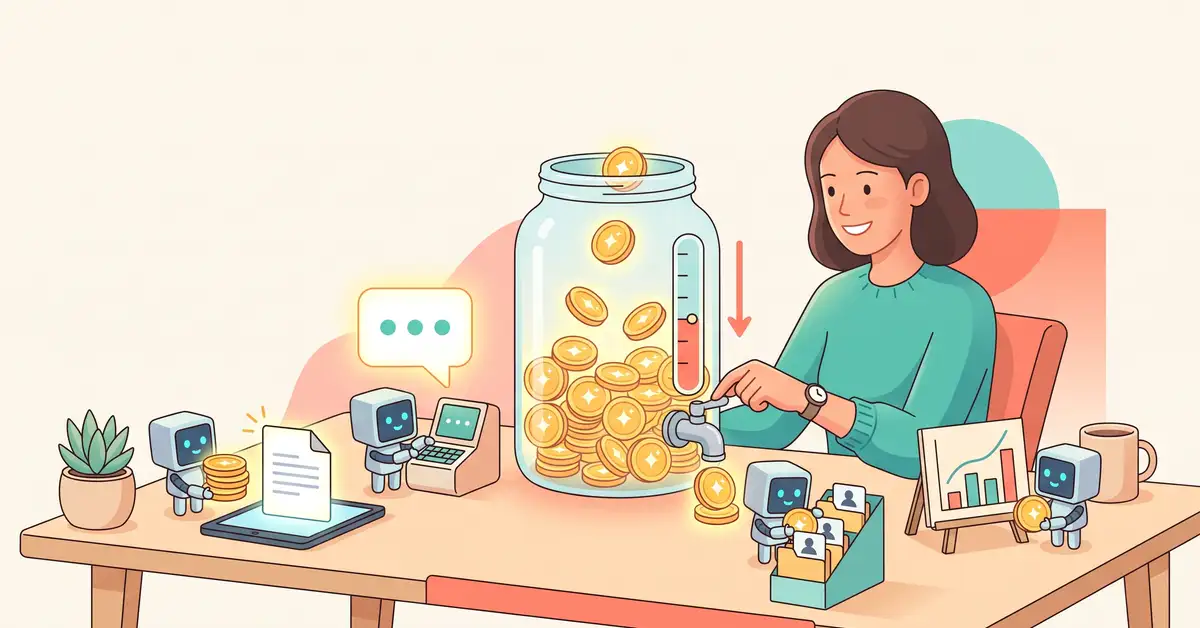
You can find HubSpot's credit rates. You can find your monthly allowance. What you cannot easily find is the sentence that connects them — so most...
 Clwyd Probert : Mar 23, 2026, 12:00:00 PM
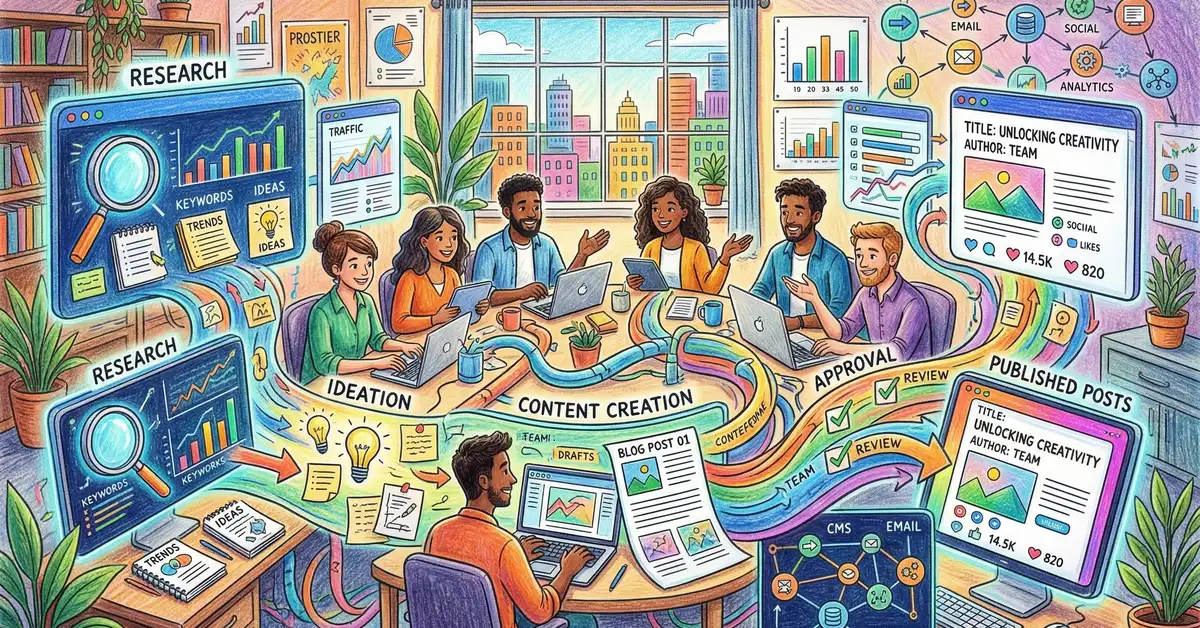
Marketing teams lose hours every week to repetitive tasks. See five AI marketing workflows, from brief to reporting, and what to automate in each.
 Clwyd Probert : Mar 26, 2026, 9:00:00 AM
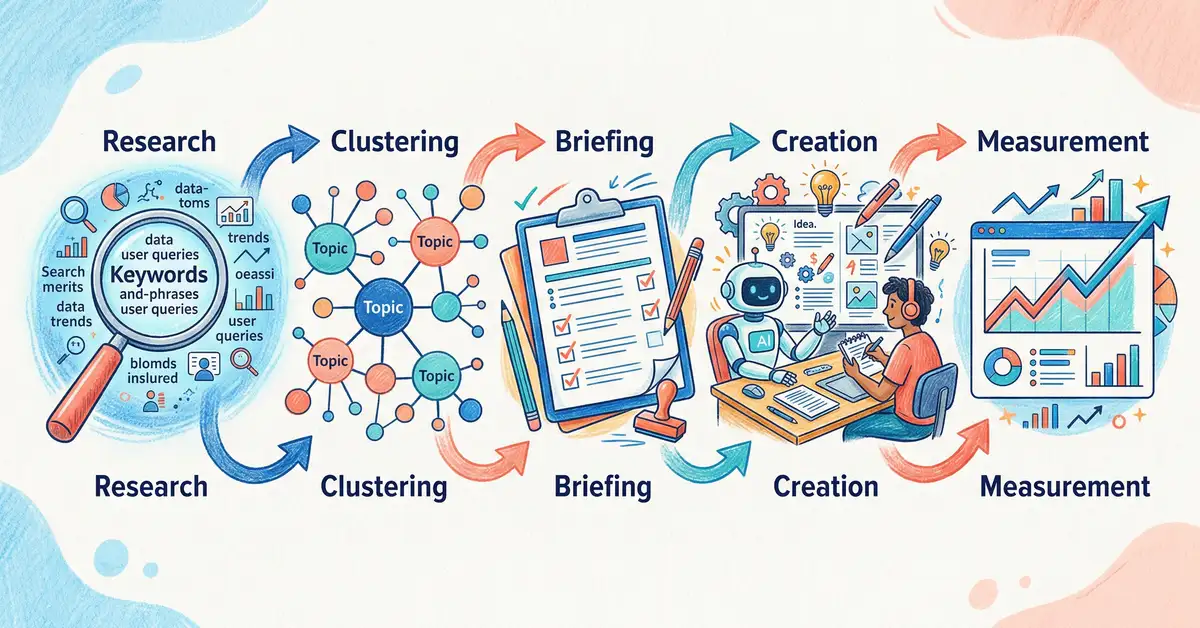
Build an AI content strategy, from research and clustering to briefs, creation and measurement, with a five-stage framework.
 Clwyd Probert : Apr 18, 2026, 11:00:00 AM
Free marketing ROI calculator with channel-specific formulas and B2B benchmarks. Downloadable Excel workbook with scenario models and attribution...