
How it works
From your web address to a plan you can follow.
Give Mary your web address. Here’s everything that happens next, the screens you’ll see, and every point where you decide.
Illustrative cards with sample data. Harbour Supply is a fictional company.
What happens after you give Mary your web address?
Three stages. Mary does the reading and the writing. You check, correct and approve.
-
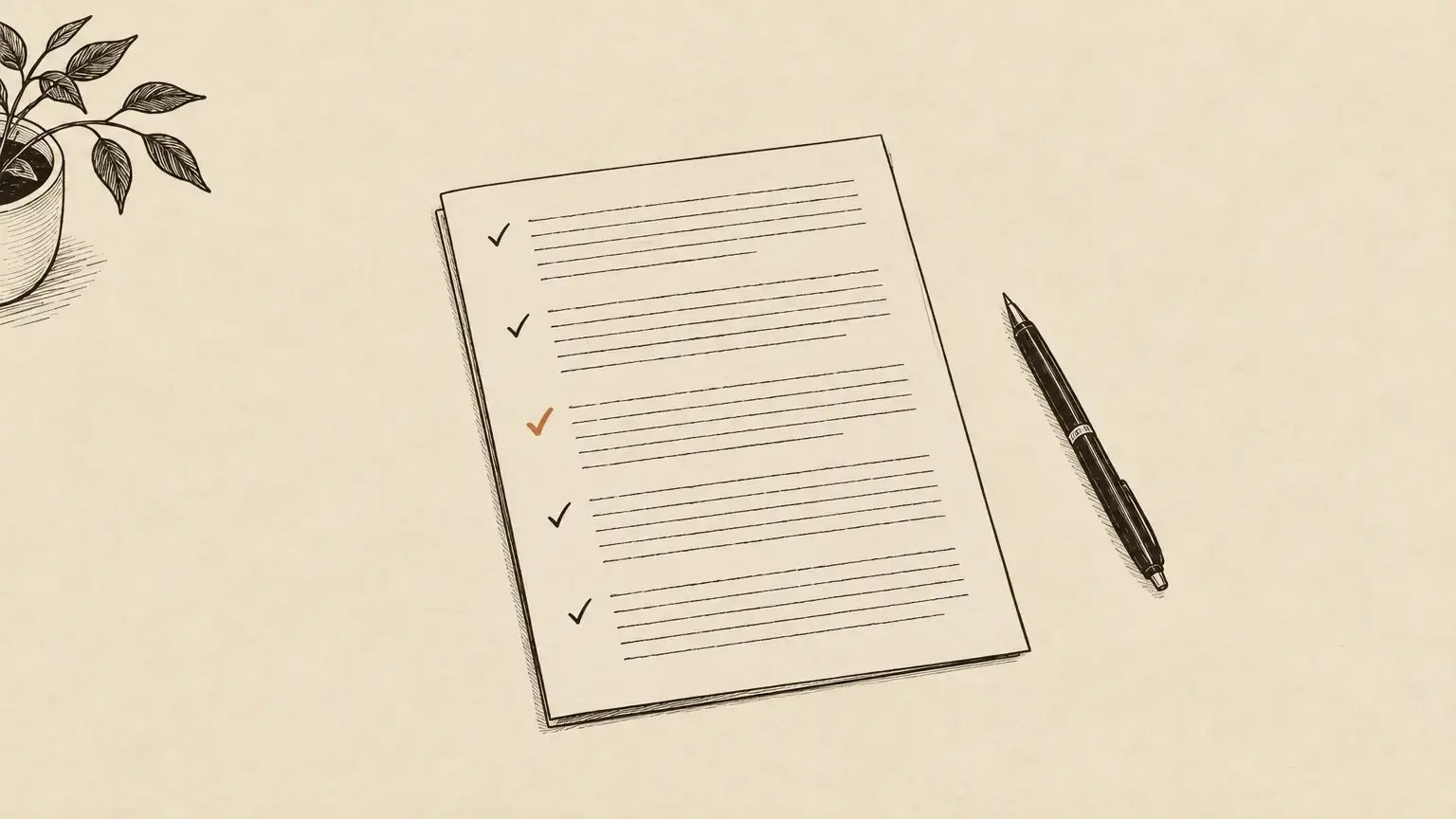
 Stage 1 · steps 1–7 Understand Mary reads your website and explains your business and your best customers. You: check it, and correct anything.
 -
 Stage 2 · steps 8–9 Create Mary sets your brand voice, then writes articles and checks each one before you see it. You: approve each article.
 -
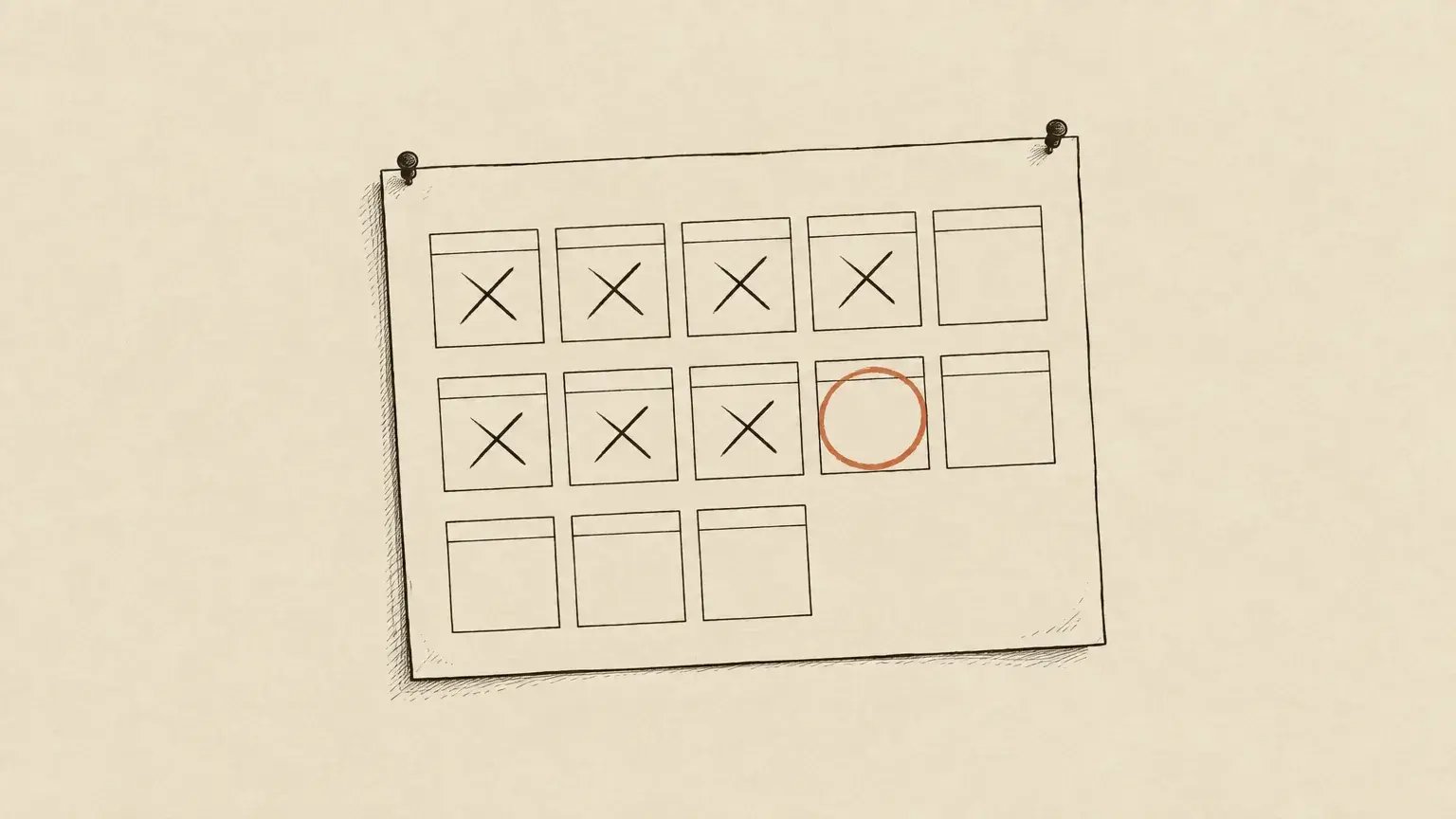 Stage 3 · steps 10–12 Run Mary builds a 90-day plan around your hours and carries it out piece by piece. You: approve each piece.
Stage 1 · Understand
How does Mary get to know your business?
- Step 1
Give Mary your web address
That’s the only thing she needs. There are no questionnaires and no setup forms. Each website becomes a project, and the project keeps every reading of that site, so you can compare one with the next.
Illustrative card with sample data
- Step 2
Mary reads every page she can reach
She shows how many pages she’s found and read as she goes. When she’s done, you can see every page she read. Any page she couldn’t read is listed, not quietly dropped.
Illustrative card with sample data
- Step 3
Your company, explained
Mary works out what you do, where you work, who you sell to, how you describe yourself and what proof you show, such as clients, case studies and certifications. Every line carries a label saying where it came from. Point at one to see the exact sentence and the page.
How Mary checks her work →4 1 2 3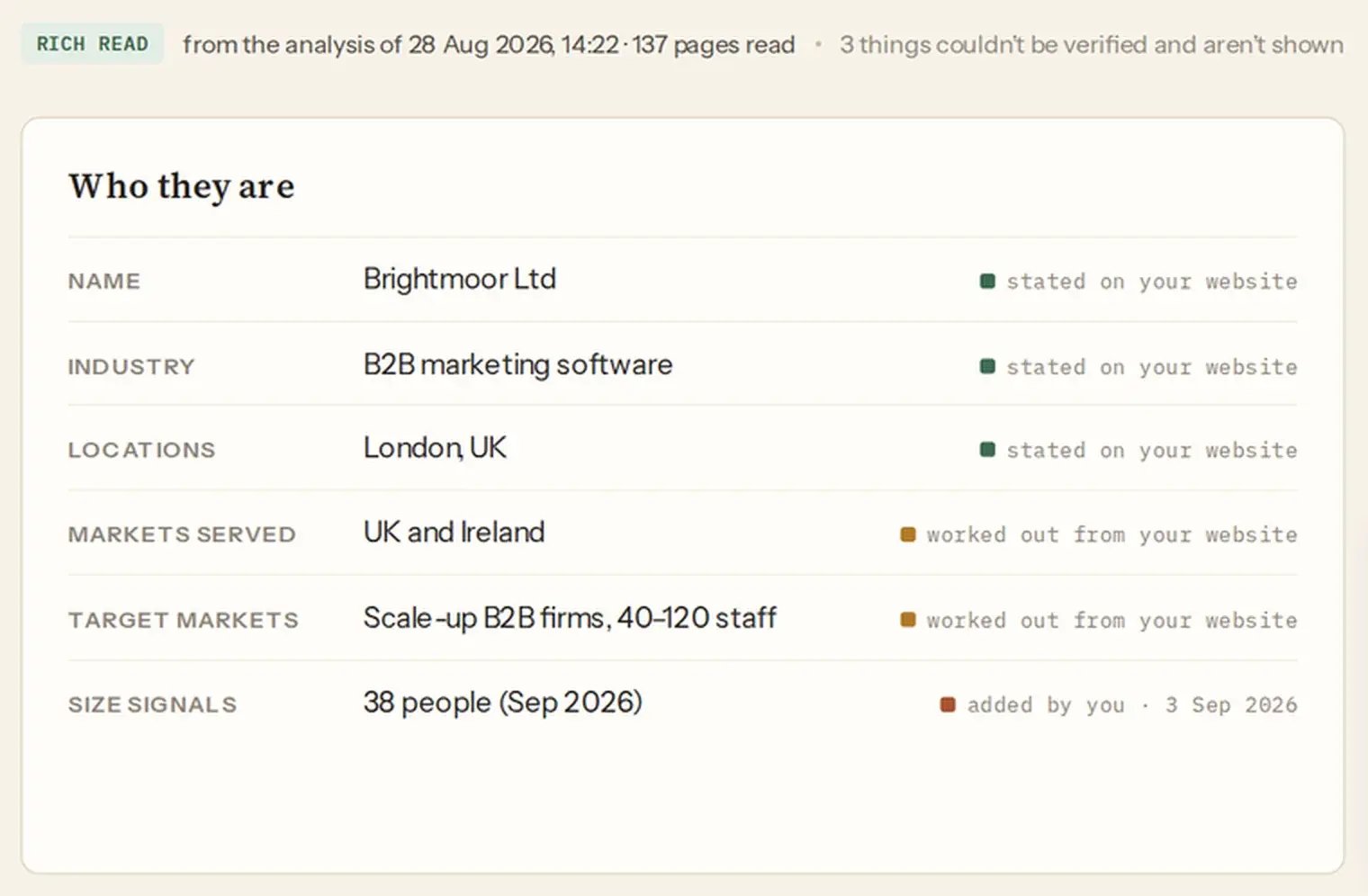
1stated on your websiteCopied from one of your pages. 2worked out from your websitePieced together from several pages, which are listed. 3added by youYou corrected it. See step 4. 4couldn’t be verifiedLeft out, and Mary tells you how many. Real screen with sample data. Mary’s own best guesses carry a fourth label, “inferred”.
- Step 4
Correct anything
If Mary gets something wrong, change it. Your correction is marked “added by you” with your name and the date. Mary keeps her original reading so you can go back, and what she builds next follows your correction.
1 2 3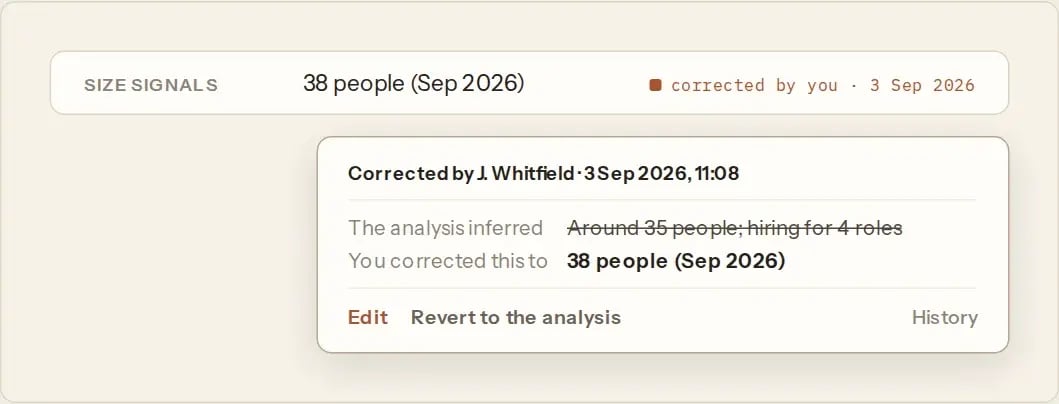
1Your name and the date go on the change 2What Mary first read is kept 3Edit it again, or go back to Mary’s reading Real screen with sample data
- Step 5
Your best customers
Mary writes buyer personas (profiles of your best customers): who they are, what they care about, what worries them and what makes them say yes. Each one shows how sure Mary is, which website it came from, and how much of it rests on your own pages.
More about customer profiles →1 2 3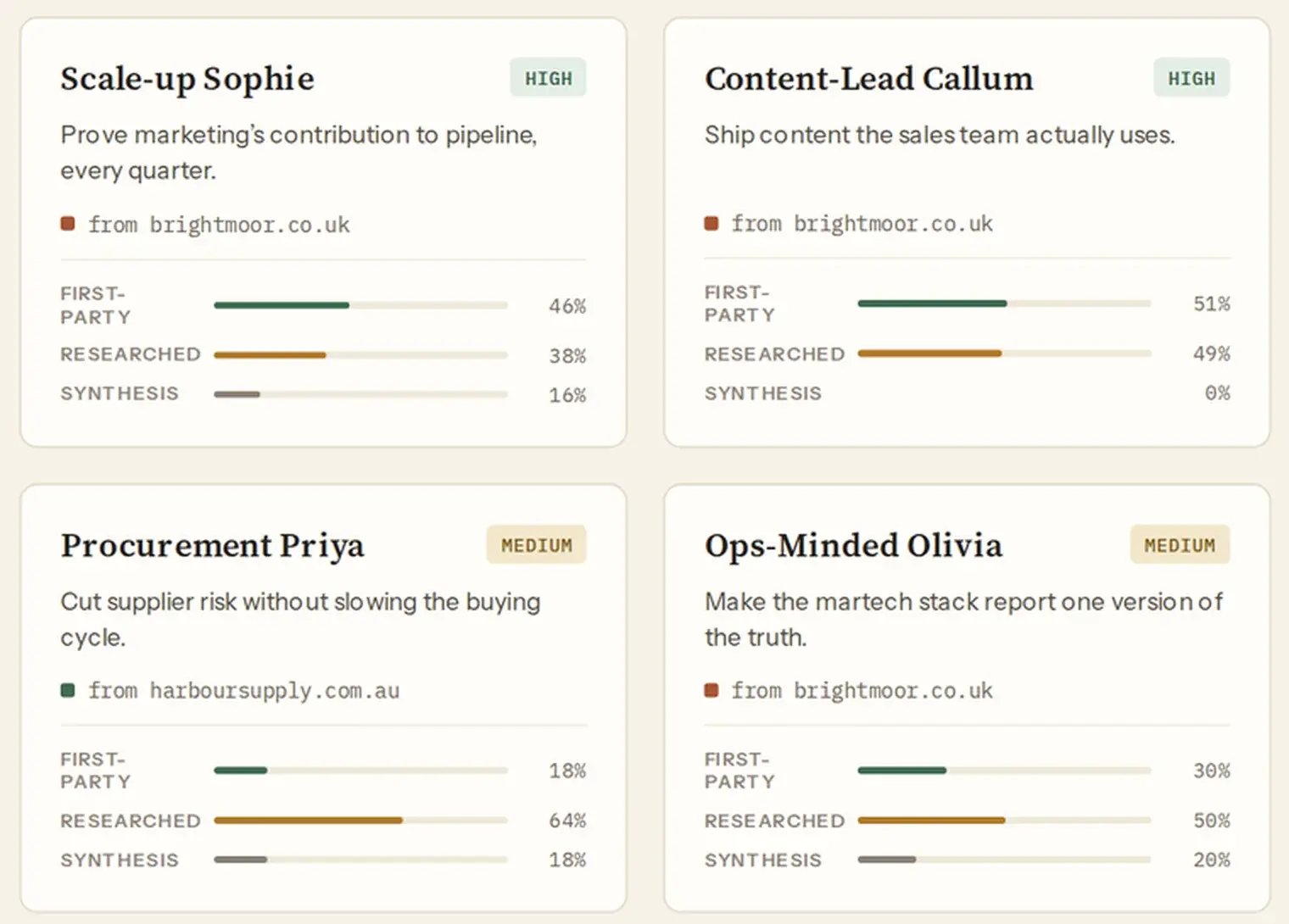
1How sure Mary is: high, medium or low 2Which website the profile came from 3How much rests on the website itself, on outside research, and on Mary’s own reading Real screen with sample data
- Step 6
A website health check
For every page she reads, Mary runs about 60 checks, such as page titles, headings and broken links, and tells you plainly what to fix. She keeps “checked and fine” apart from “never checked”, so your site is never called healthy when nobody looked.
Illustrative card with sample data
- Step 7
Reports you can download
Everything Mary found about your business goes into one report, with the sources included. Download it as a web page, Markdown or a PDF to share with your team or keep on file.
What’s in the report- Summary
- Your company and what you offer
- Products and services
- Your best customers
- Website snapshot
- How Mary worked, and her sources
Web pageMarkdownPDF
Stage 2 · Create
How does Mary write for you?
- Step 8
Your brand voice
Before she writes anything, Mary proposes your brand voice (how your business sounds) from your website: your tone, who you write for, words you never use and anything every article must say. You accept or edit each field.
More about articles →1 2 3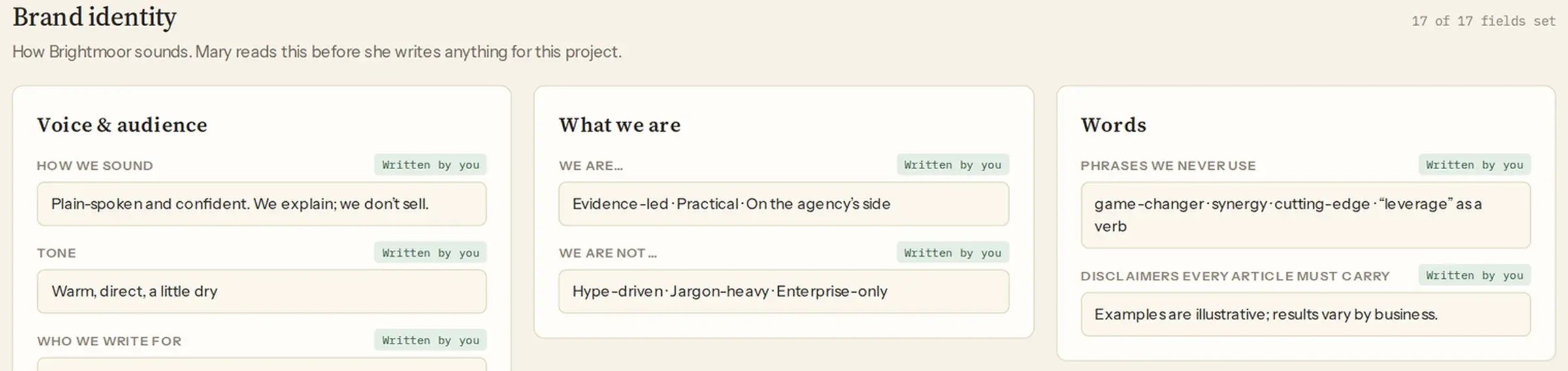
1Each field shows whether Mary suggested it or a person wrote it 2What your business is, and isn’t 3Words you never use Real screen with sample data
- Step 9
Articles, written, checked and approved
Mary researches each topic first, then writes, adds images and checks the result. Articles are written to show up on Google and in AI answers such as ChatGPT. The check lists anything to fix in plain words. Then a named person approves it against a six-point checklist. Once approved, it’s locked, and any change starts a new version.
More about articles →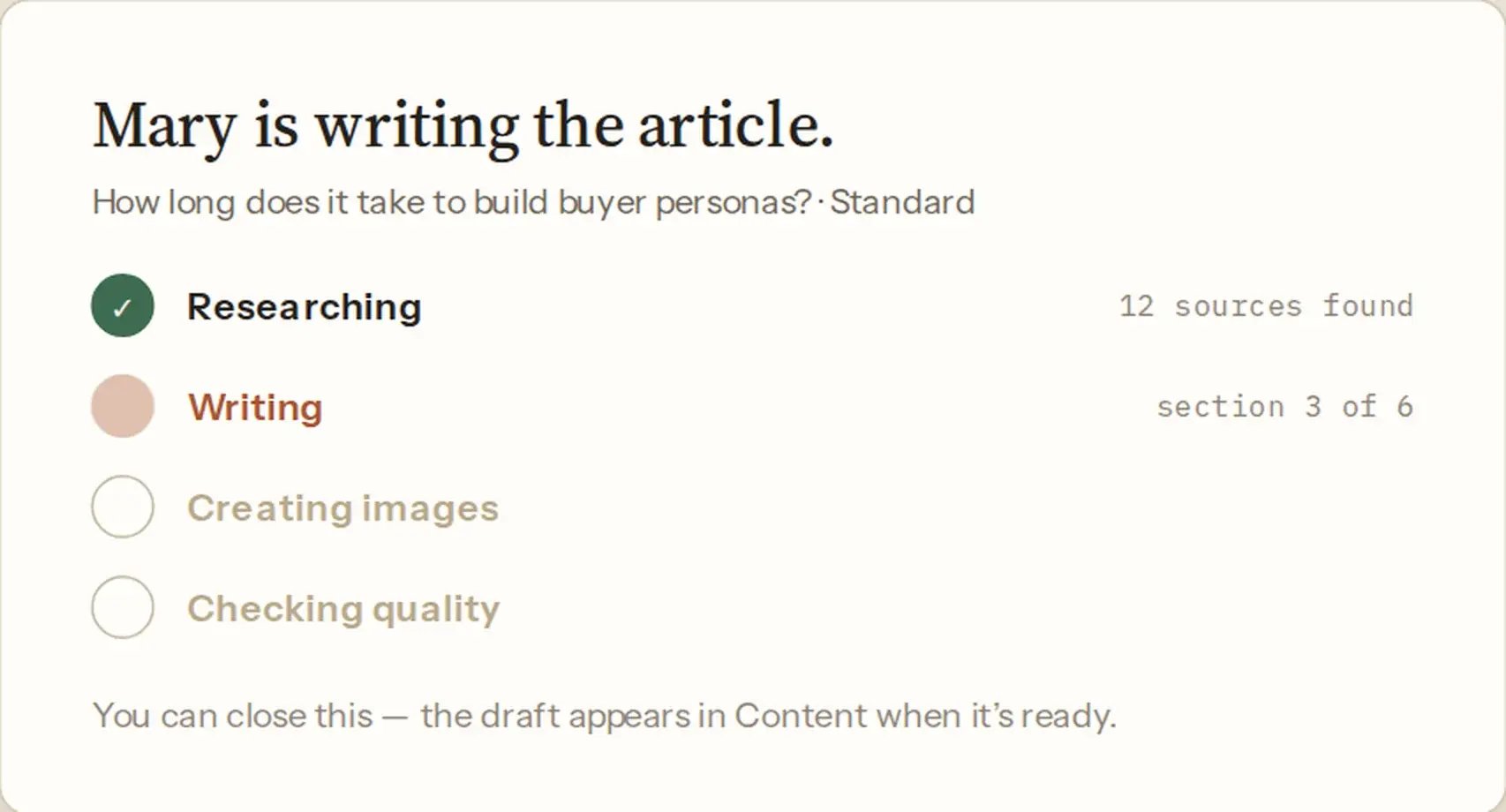
1Researched, then writtenEach step is shown as it happens. 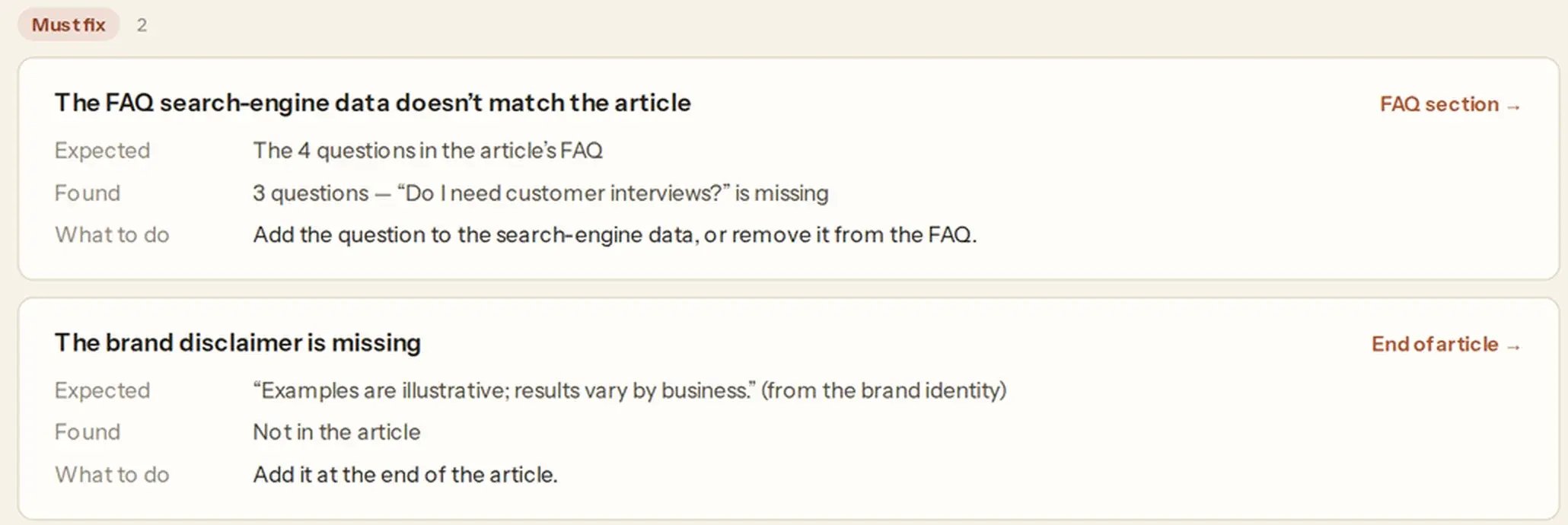
2Checked before you see itMust fix, should fix, and passages worth a second look. 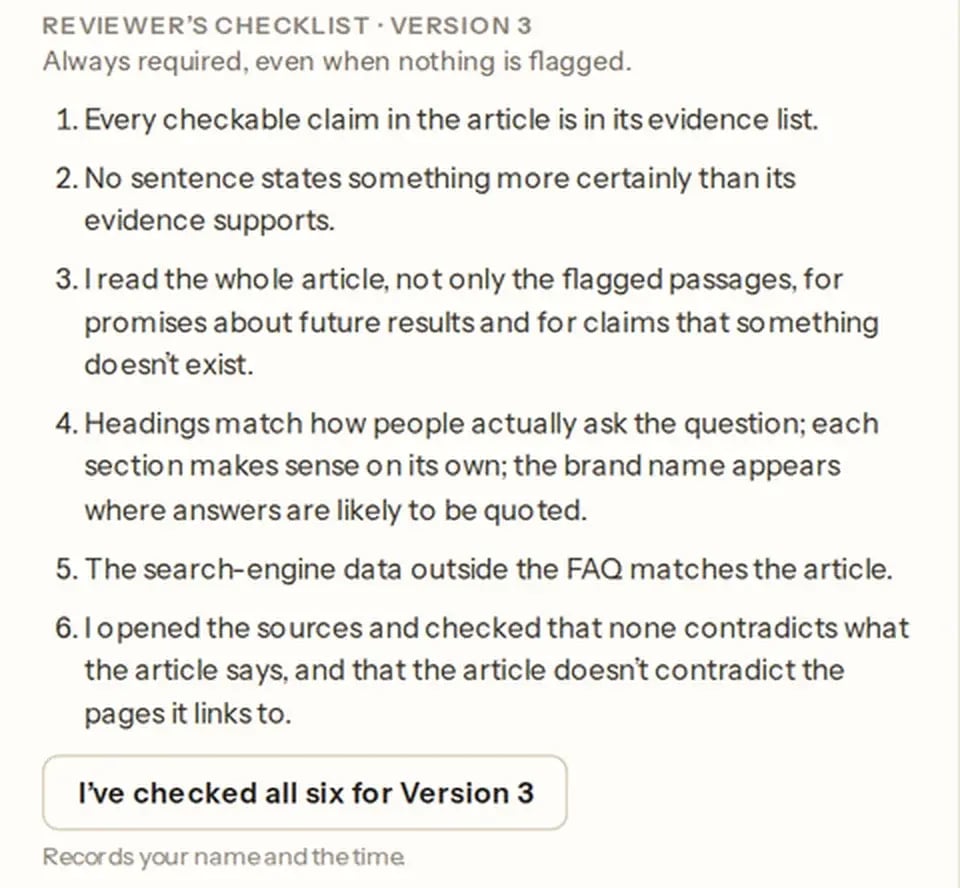
3Approved by a named personSix points, signed for that version. Real screens with sample data
Stage 3 · Run
How does Mary keep your marketing running?
- Step 10
Your 90-day plan
Mary builds a 90-day plan from everything she’s learned, sized to the hours you actually have. Then she carries it out piece by piece. Each piece is drafted when it’s due, checked, and waits for your OK. You can change the plan whenever you like.
More about the 90-day plan →Illustrative card with sample data
- Step 11
Ask your customers, and expert advisers
Try a headline or an offer on your customer profiles before you publish it. You can also ask expert advisers for a CEO’s, a salesperson’s, a marketer’s or a customer-support view. Every answer draws on what Mary knows about your business, and you can add your own documents.

Illustrative card with sample data
- Step 12
Many clients in one account
If you look after more than one business, each website gets its own project, with a switcher between them. It’s built for agencies running many clients.
For agencies →1 2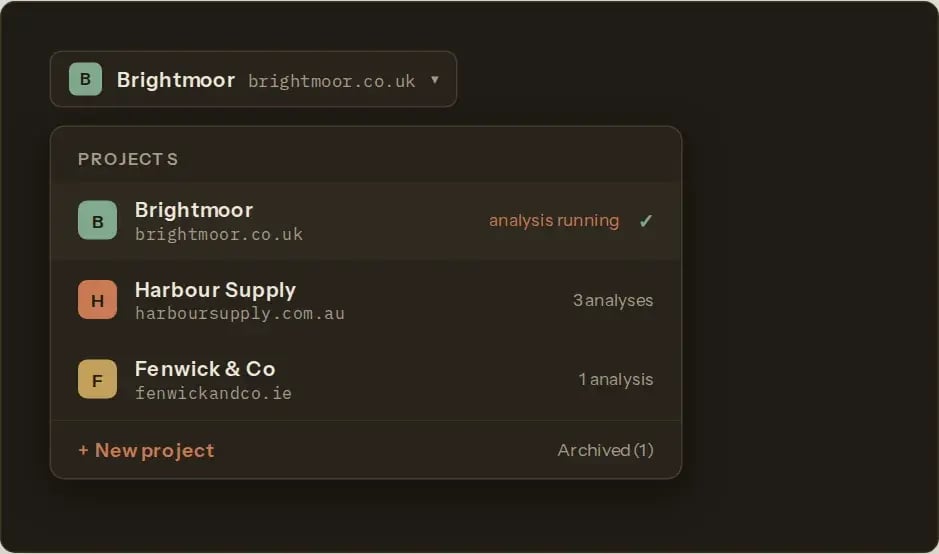
1One project for each website 2Start a new one whenever you need it Real screen with sample data
What do you approve, and when?
Mary never publishes anything on her own. These are the points where you decide.
What if Mary can’t find something, or you reach your limit?
She tells you what she couldn’t find
Anything Mary couldn’t check is left out, and the screen says how much. Pages she couldn’t read are listed.
Limits are shown before any work starts
Each plan has a monthly allowance. Mary shows what a piece of work will use before she starts, warns you as you get close, and stops at the limit rather than running over. No surprise bills.
Illustrative card with sample data
Questions about how Marketing Mary works
What do I need to give Mary?
Only your web address. Mary does the reading, and you correct anything she got wrong afterward.
What happens if Mary gets something wrong?
You correct it. Your correction is marked “added by you”, Mary keeps her original reading so you can go back, and what she builds next follows your correction.
Does anything go live without my approval?
No. Every article and every piece of the 90-day plan is checked, then waits for a named person to approve it against a six-point checklist.
What’s the difference between “checked and fine” and “never checked”?
“Checked and fine” means Mary ran the check on that page and it passed. “Never checked” means the check didn’t run, so Mary makes no claim either way.
Can I download what Mary finds?
Yes. The report downloads as a web page, Markdown or a PDF, with its sources included.
How do usage limits work?
Each plan has a monthly allowance. Mary shows what work will use before she starts, warns you as you get close, and stops at the limit rather than running over. Plans run from Free to Enterprise; pricing is to be confirmed.
See what Mary finds on your website.
Join the early-adopter list and be one of the first to try Mary on your own website.
Plans from Free to Enterprise · pricing to be confirmed