
What is an evidence-graded buyer persona?
 Clwyd Probert: Sep 30, 2026, 8:25:00 PM
An evidence-graded buyer persona is a buyer persona in which every claim carries a label saying where it came from: first-party evidence (the...
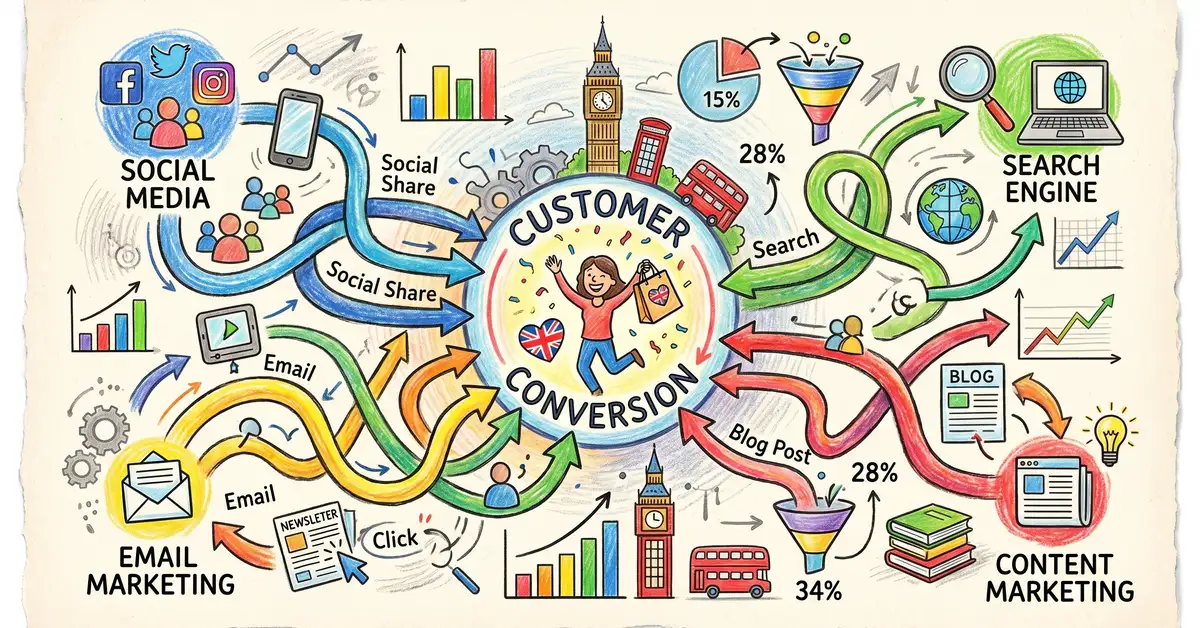
Marketing attribution models determine how credit for conversions gets distributed across every touchpoint in your buyer's journey. If you're spending across six or more channels but can't tell which ones actually drive revenue, you're flying blind. Single-touch models, still common in B2B, systematically misallocate budget.
This guide breaks down every major attribution model — first-touch, last-touch, linear, time-decay, position-based, W-shaped, and data-driven — with the formulas, strengths, limitations, and implementation guidance you need to choose the right one for your business. Whether you're running campaigns through multi-channel marketing automation or still reconciling spreadsheets, this is your roadmap to attribution that actually works.
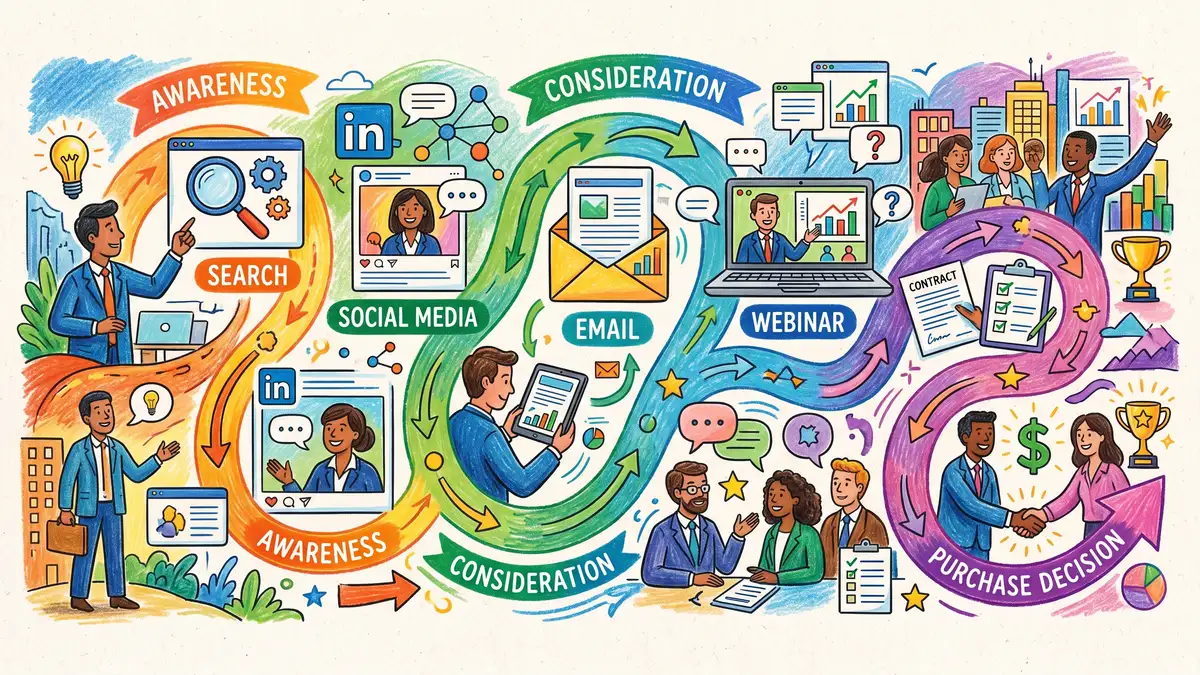
Marketing attribution models matter because they directly control where your budget goes. Without accurate attribution, you're making six-figure decisions based on incomplete data. B2B buyer journeys involve many touchpoints before conversion, and enterprise purchases involve more. Single-touch models like last-click ignore every touchpoint except one, misattributing credit and distorting your entire channel mix.
The financial impact is real. When credit is misallocated, budget follows it: over-credited channels keep their spend, and the channels that build pipeline get cut. Multi-touch attribution gives you the evidence to move that money.
Key Takeaway: Attribution isn't an analytics project — it's a budget allocation project. Every month you rely on single-touch attribution, you're systematically over-investing in "deal closer" channels (paid search, direct) and under-investing in the awareness and nurturing channels (content, email, organic) that create purchase intent in the first place.
First-touch attribution awards 100% of conversion credit to the very first touchpoint a prospect interacts with before converting. If someone discovers your brand through a LinkedIn ad, then engages with five more touchpoints before purchasing, LinkedIn gets all the credit.
The formula is straightforward: first touchpoint receives 100% of conversion value; all subsequent touchpoints receive 0%.
When to use it: First-touch works best for measuring which channels drive initial awareness, particularly during new market entry campaigns or when you're testing new acquisition channels. It answers the question "where do our prospects first discover us?" clearly.
Strengths: Simple to calculate and implement. Highlights awareness-generation channels. Useful for top-of-funnel budget decisions.
Limitations: Completely ignores nurturing efforts. Inflates the value of broad channels like social and display. Undervalues bottom-funnel activity. Inappropriate for B2B sales cycles exceeding 90 days, which covers most mid-market and enterprise deals.
First-touch is rarely the right primary model for B2B, and for good reason. In a journey with 7 touchpoints, giving 100% credit to the first one tells you almost nothing about what actually converted the deal.
Last-touch attribution assigns 100% of conversion credit to the final touchpoint before purchase. It was the default model in Universal Analytics for years and is still widely used.
The formula: last touchpoint receives 100% of conversion value; all prior touchpoints receive 0%.

Why it misleads B2B teams: Consider a typical prospect journey. Week 1: LinkedIn article ad creates awareness. Week 2: email campaign drives webinar registration. Week 3: webinar attendance deepens consideration. Week 4: product comparison email moves them to decision stage. Week 5: they navigate directly to your pricing page and submit a form. Last-touch attribution gives 100% credit to "direct traffic" — a generic form submission — while the LinkedIn ad, email sequence, and webinar that created the entire buying journey get zero.
The real-world consequences are damaging. Channels that work early and mid-journey, such as email, look as if they contribute little under last-touch models. This leads to systematic budget cuts in the exact channels that generate pipeline.
The shift away from last-touch is accelerating. Google Analytics 4 uses data-driven attribution as its default model, yet many B2B teams still report on last-touch despite journeys with many touchpoints — a disconnect that costs real money.
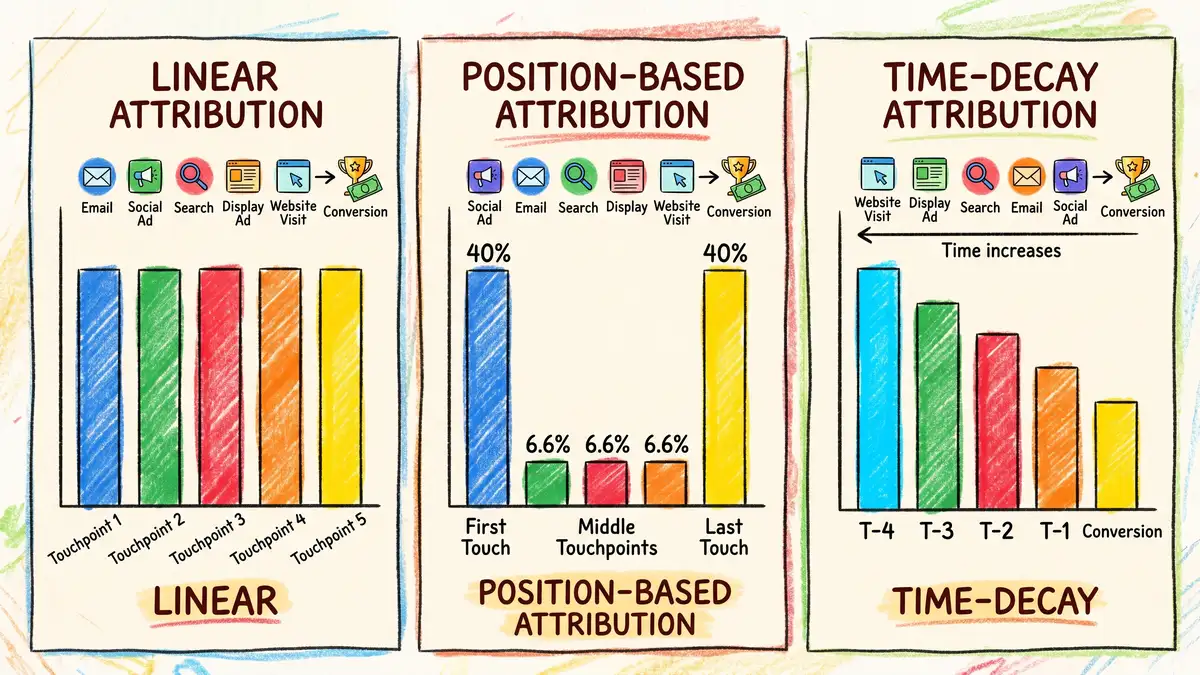
Time-decay attribution assigns progressively higher credit to touchpoints closer to the conversion event. Touchpoints that happened yesterday count more than those from three weeks ago, following an exponential decay curve. This reflects a fundamental truth about B2B buying: interactions closer to the purchase decision carry more weight because they occur when intent is highest.
The formula uses exponential decay: each touchpoint's credit equals the conversion value multiplied by e raised to the power of negative lambda times t, divided by the sum of all such values. In practice, with a 7-day half-life, the conversion-day touchpoint gets roughly 50% credit, the day-before touchpoint gets 25%, two days before gets 12.5%, and earlier touchpoints share the remainder.
When it works well: Time-decay excels for B2B SaaS with 6 to 10 week sales cycles where recent interactions genuinely signal stronger purchase intent. It mathematically honors temporal relevance without completely discounting early-stage awareness.
Limitations: Requires parameter tuning — the "half-life" assumption varies by industry and deal complexity. May undervalue long-running lead nurturing sequences. Can be complex to communicate to stakeholders who want simple answers.
Time-decay is less common than single-touch models, partly because it requires more configuration. Note that Google Analytics 4 removed time-decay, along with first-click, linear and position-based, in November 2023, so in GA4 you need to calculate it yourself, for example in BigQuery.
Linear attribution distributes conversion credit equally across every touchpoint in the buyer journey. If a prospect interacts with five touchpoints before converting on a $10,000 deal, each touchpoint receives $2,000 in attributed credit.
The formula: credit per touchpoint equals conversion value divided by total number of touchpoints.
Who benefits: Linear attribution works for organizations where all touchpoints have genuinely similar influence — rare in B2B but possible in short-cycle, high-velocity sales. It's also useful as a baseline comparison when evaluating other models, because it reduces channel bias and acknowledges every marketing activity's contribution.
Strengths: Simple to explain to stakeholders. Reduces the "winner takes all" distortion of single-touch models.
The core limitation: Linear attribution treats a first display ad impression exactly the same as a final negotiation conversation. In B2B journeys spanning 12 to 20 weeks with vastly different touchpoint quality, this equal weighting produces misleading budget signals. A LinkedIn awareness ad simply doesn't carry the same conversion influence as a demo call — yet linear attribution says they do.
Choosing the right attribution model depends on your sales cycle length, touchpoint count, data maturity, and team resources. Here's how the major models stack up across the dimensions that matter most for B2B teams.
First-Touch Attribution. Best for: awareness channel analysis and new market entry. Credit distribution: 100% to first touchpoint. Implementation complexity: very low. Data requirements: none beyond basic tracking. Recommended for: short cycles under 4 weeks with 3 to 5 touchpoints.
Last-Touch Attribution. Best for: direct performance measurement and conversion optimization. Credit distribution: 100% to last touchpoint. Implementation complexity: very low. Data requirements: none. Recommended for: self-serve products with short cycles — but actively discouraged for any B2B with 6 or more touchpoints.
Linear Attribution. Best for: balanced full-journey view and baseline comparisons. Credit distribution: equal across all touchpoints. Implementation complexity: very low. Data requirements: none. Recommended for: early-stage attribution adoption when you need simplicity.
Time-Decay Attribution. Best for: sales-assisted B2B with 6 to 10 week cycles. Credit distribution: exponentially weighted toward recent touchpoints. Implementation complexity: low to medium. Data requirements: conversion window configuration. Recommended for: mid-market SaaS where recent interactions genuinely signal higher intent.
Position-Based (U-Shaped) Attribution. Best for: B2B with clear awareness-to-decision journey stages. Credit distribution: 40% first touch, 40% last touch, 20% split across middle. Implementation complexity: medium (not natively available in GA4 — requires BigQuery custom calculation). Recommended for: 4 to 8 touchpoint journeys in mid-market SaaS.
W-Shaped Attribution. Best for: complex B2B with distinct consideration milestones. Credit distribution: 30% first touch, 30% key middle touchpoint (demo or proposal), 30% last touch, 10% across remaining. Implementation complexity: high (requires CRM integration to identify milestone events). Recommended for: enterprise deals with 10 or more touchpoints and distinct stage gates.
Data-Driven (Algorithmic) Attribution. Best for: organizations with high conversion volume and mature data infrastructure. Credit distribution: machine learning assigns credit based on observed conversion patterns. Implementation complexity: low in GA4 (it's the default), but it needs enough conversion volume to be reliable. Recommended for: high-volume SaaS and e-commerce B2B.
The Bottom Line: For most B2B SaaS teams with 50 to 250 employees, position-based or time-decay models offer the best balance of accuracy and implementability. Start with time-decay, run parallel reporting with position-based, and choose whichever generates the most stakeholder buy-in.
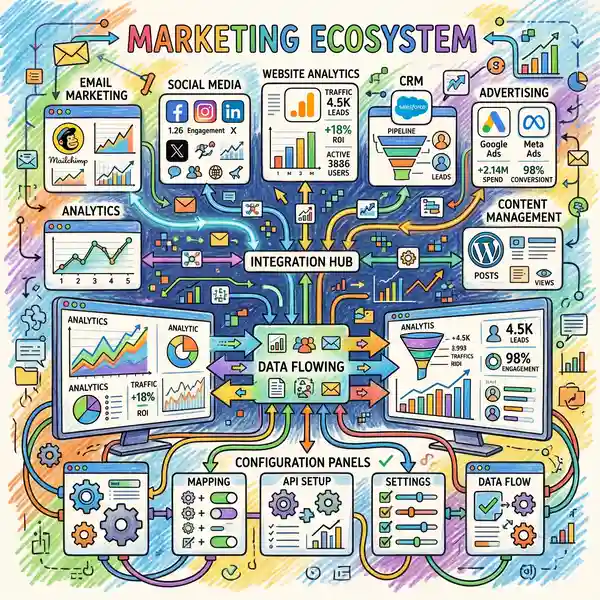
Implementation varies significantly by platform, but the core steps follow a consistent pattern: configure your attribution model, set the right conversion window, integrate your CRM, and establish UTM governance. Here's platform-specific guidance.
Google Analytics 4 (GA4). GA4 uses data-driven attribution as its default model. To change models, navigate to Admin, then Data Display, then Attribution Settings. GA4 now offers data-driven and paid and organic last click; first-click, linear, time-decay and position-based were removed in November 2023, so any rule-based model requires a BigQuery custom calculation (for position-based, SQL that assigns 40/40/20 credit splits). For B2B, configure your conversion window to 120 to 180 days (the default 90-day window is too short for most mid-market sales cycles). Implement server-side tagging through Google Tag Manager to preserve tracking through cookie deprecation.
HubSpot. HubSpot offers first-touch, last-touch, linear, and time-decay models in Professional editions, with custom attribution available in Enterprise. The key advantage is that HubSpot's first-party data collection — forms, emails, calls, meeting bookings — provides more complete B2B journey visibility than GA4 alone. Configure attribution under Settings, then Objects, then Deals. Set your attribution window to 6 to 12 months for full enterprise sales cycle coverage. Connect GA4 via the Integrations menu to combine web analytics with CRM touchpoints.
Salesforce. Salesforce Einstein Attribution operates at the account and opportunity level, making it ideal for enterprise B2B. It uses machine learning to assign credit to campaigns influencing closed-won accounts. The platform requires high data quality in campaign member associations. For Marketo users, Marketo Measure 2.0 integrates with Salesforce to provide ML-based multi-touch attribution, though expect some attribution discrepancy between the two systems due to different matching algorithms.
Critical integration step: Regardless of platform, implement comprehensive UTM parameter governance. Standardize your parameters — utm_source (google, meta, linkedin), utm_medium (cpc, social, email, organic), utm_campaign (quarter-product-audience format) — and enforce them through marketing approval gates before campaign launch.
Attribution implementation fails more often from avoidable mistakes than from model selection. These are five errors that commonly cost B2B teams budget.
Mistake 1: Using a 30-day attribution window for long sales cycles. Many B2B teams keep a 30-day attribution window regardless of actual sales cycle length. For a mid-market SaaS deal spanning 12 to 20 weeks, this means every touchpoint older than 30 days receives zero credit — systematically erasing the awareness and consideration activities that created the opportunity. Fix: audit your actual sales cycle lengths by segment in your CRM, then set differentiated windows. SMB self-serve: 30 days. Sales-assisted SMB: 60 days. Mid-market: 120 days. Enterprise: 180 days.
Mistake 2: Ignoring offline touchpoints. Many B2B organizations cannot connect offline and online journeys. Trade shows, phone calls, in-person meetings, and sales negotiations are part of most B2B buyer journeys, and for enterprise deals, sales calls carry much of the decision-stage influence. Fix: implement CRM-based offline touchpoint logging. Train your sales team to log every interaction (aim for 60% to 70% compliance initially). Post-process offline and online data in a combined attribution report.
Mistake 3: Not connecting GA4 to your CRM. Without CRM integration, GA4 cannot match user sessions to actual pipeline outcomes. You'll see "direct traffic" conversions that are actually the final step of a 10-touchpoint journey. Fix: implement GA4 User ID matching to your HubSpot Contact ID or Salesforce record. Configure data import for 24-hour sync. This single integration connects previously unattributed sessions to real pipeline.
Mistake 4: Treating all deal sizes with the same model. A self-serve free trial and a $100K enterprise contract don't follow the same buyer journey. Using one attribution model for both produces meaningless averages. Fix: segment your attribution by deal size and buyer type. Run separate models for SMB (simple, short window) and enterprise (complex, long window) segments.
Mistake 5: Expecting perfect data before starting. Attribution is inherently imperfect. No model captures 100% of buyer influence. The goal is "better than last-click," not "perfect." Attribution works best combined with content strategy measurement frameworks and sales alignment initiatives.
Warning — The Cost of Getting It Wrong: Poor attribution doesn't just blur a report. It sends real budget to the wrong channels in every planning cycle until someone fixes the model.
Here's a 20-week implementation roadmap for a mid-market B2B SaaS team.
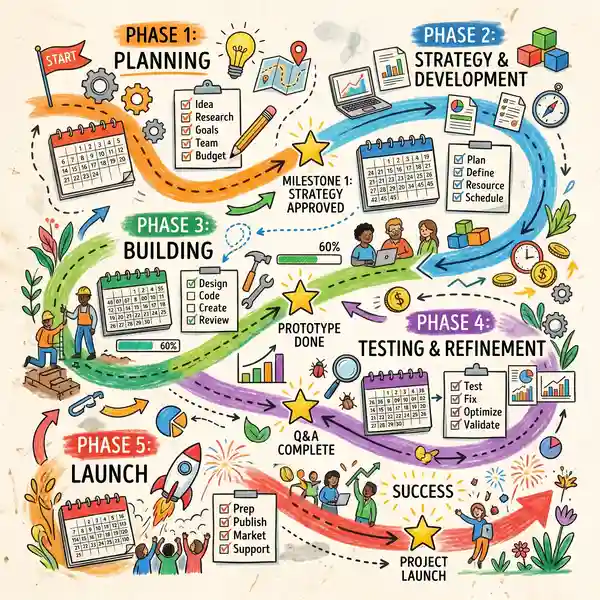
Phase 1: Discovery and Planning (Weeks 1 to 3). Interview stakeholders across marketing, sales, and finance to define what "good attribution" means for your organization. Audit your current tech stack and map every data source. Analyze actual sales cycle lengths by segment from your CRM — this determines your attribution windows. Output: requirements document, martech inventory, and sales cycle analysis.
Phase 2: Model Selection and Design (Weeks 4 to 6). Choose your primary attribution model based on this guide's comparison framework. For most mid-market B2B SaaS teams, start with time-decay and run position-based in parallel, calculating either in BigQuery or Excel if your platform doesn't offer it. Design your data architecture — which systems need to connect and how. Output: model recommendation, data integration plan, and stakeholder communication strategy.
Phase 3: Build and Configure (Weeks 7 to 14). Configure GA4 attribution settings and conversion windows. Build CRM integration pipelines connecting HubSpot or Salesforce to GA4. Develop attribution calculation logic in SQL or Excel. Create stakeholder dashboards and reports. This is the longest phase — plan for 8 weeks including inevitable data quality troubleshooting.
Phase 4: Testing and Validation (Weeks 15 to 17). Run variance analysis comparing your new model's output against last-touch. Reconcile GA4 data with CRM records. Get stakeholder feedback and fine-tune parameters. Document operating procedures and troubleshooting guides.
Phase 5: Launch and Training (Weeks 18 to 20). Train your team on reading attribution reports. Present budget allocation recommendations to leadership. Establish quarterly review cycles for model parameter adjustment. Plan for 4 hours per week of ongoing maintenance.
Resource estimate: Plan for time from a project lead, a data engineer, an analytics engineer, a BI analyst, and stakeholders across the business. For teams without in-house data engineering, start with the attribution your CRM already offers and add sources one at a time.
For most B2B SaaS teams with 50 to 250 employees, position-based (U-shaped) or time-decay attribution models offer the best balance of accuracy and ease of implementation. Position-based gives 40% credit to first and last touches with 20% spread across the middle, while time-decay weights recent interactions more heavily. Start with time-decay, then run position-based in parallel to compare results.
It varies with deal size and the size of the buying group, so count the touchpoints on your own closed-won deals by segment. For a sense of scale, Dreamdata's 2025 benchmarks, based on thousands of deals from its B2B customers, put the average customer journey at 211 days, and 49% longer for larger companies. Journeys that long make single-touch attribution fundamentally inadequate for any B2B organization with sales cycles exceeding one month.
Google Analytics 4 uses data-driven attribution (DDA) as its default model. DDA uses machine learning to evaluate converting and non-converting paths and assign credit based on each touchpoint's estimated contribution. The only other option in GA4 is paid and organic last click: first-click, linear, time-decay and position-based were removed in November 2023. B2B teams with low conversion volume can calculate a rule-based model such as time-decay or position-based in BigQuery.
Following the roadmap above, a full multi-touch attribution implementation takes about 20 weeks: discovery and planning (3 weeks), model design (3 weeks), platform configuration and CRM integration (8 weeks), testing and validation (3 weeks), and launch with training (3 weeks).
Restrictions on third-party cookies reduce attribution accuracy, especially for cross-domain journeys and retargeting. The mitigation strategy is to shift to first-party data collection through server-side tagging, authenticated user tracking, and CRM-first attribution models. B2B teams that match on known email addresses keep more of the journey visible.
Plan to measure the return yourself rather than relying on published averages: compare CAC, pipeline by channel, and sales cycle length before and after you move budget based on the new model. Gains tend to be largest when attribution is paired with sales and marketing alignment, because both teams then act on the same view of what drives pipeline.
See what Mary finds on your website.
Join the early-adopter list and be one of the first to try Mary on your own website.
Plans from Free to Enterprise · pricing to be confirmed
Clwyd Probert
Founder, Marketing Mary
Clwyd Probert is the founder of Marketing Mary, an evidence-first persona intelligence platform for B2B marketing, and CEO of Whitehat, a London-based SEO and inbound marketing agency and HubSpot Diamond Solutions Partner.
Sources: Google Analytics Help: Get started with attribution, Dreamdata 2025 LinkedIn Ads Benchmarks Report highlights
 Clwyd Probert: Sep 30, 2026, 8:25:00 PM
An evidence-graded buyer persona is a buyer persona in which every claim carries a label saying where it came from: first-party evidence (the...
 Clwyd Probert: Sep 9, 2026, 11:58:11 PM
Our own Search Console tells this story: impressions up 53% and clicks down 6% in the 28 days to September 6, 2026, compared with the 28 days before,...
 Clwyd Probert: Aug 25, 2026, 10:16:09 AM
You can find HubSpot's credit rates. You can find your monthly allowance. What you cannot easily find is the sentence that connects them — so most...
 Clwyd Probert : Mar 23, 2026, 12:00:00 PM
Five AI marketing workflows, from brief to reporting, with what to automate in each and where a person should approve.
 Clwyd Probert : Mar 27, 2026, 10:00:00 AM
Compare AI blog writer tools across all 9 publishing steps — from research to live verification. See which tools stop at drafts and which go further.
 Clwyd Probert : Apr 18, 2026, 11:00:00 AM
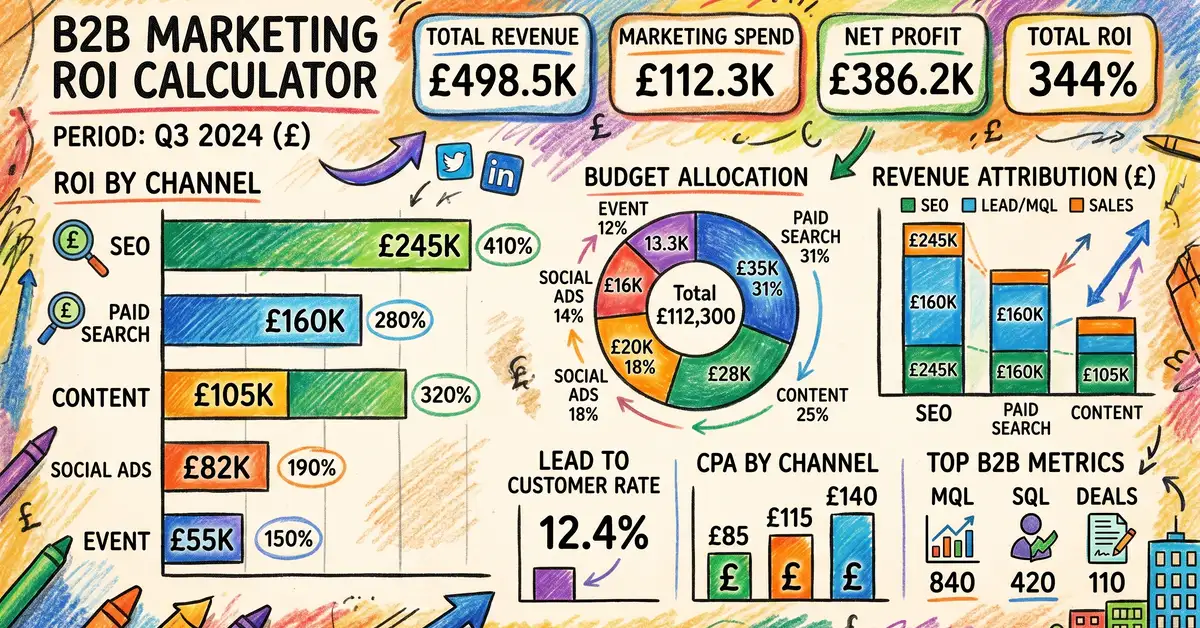
Free marketing ROI calculator with channel-specific formulas and B2B benchmarks. Downloadable Excel workbook with scenario models and attribution...