
What is an evidence-graded buyer persona?
 Clwyd Probert: Sep 30, 2026, 8:25:00 PM
An evidence-graded buyer persona is a buyer persona in which every claim carries a label saying where it came from: first-party evidence (the...
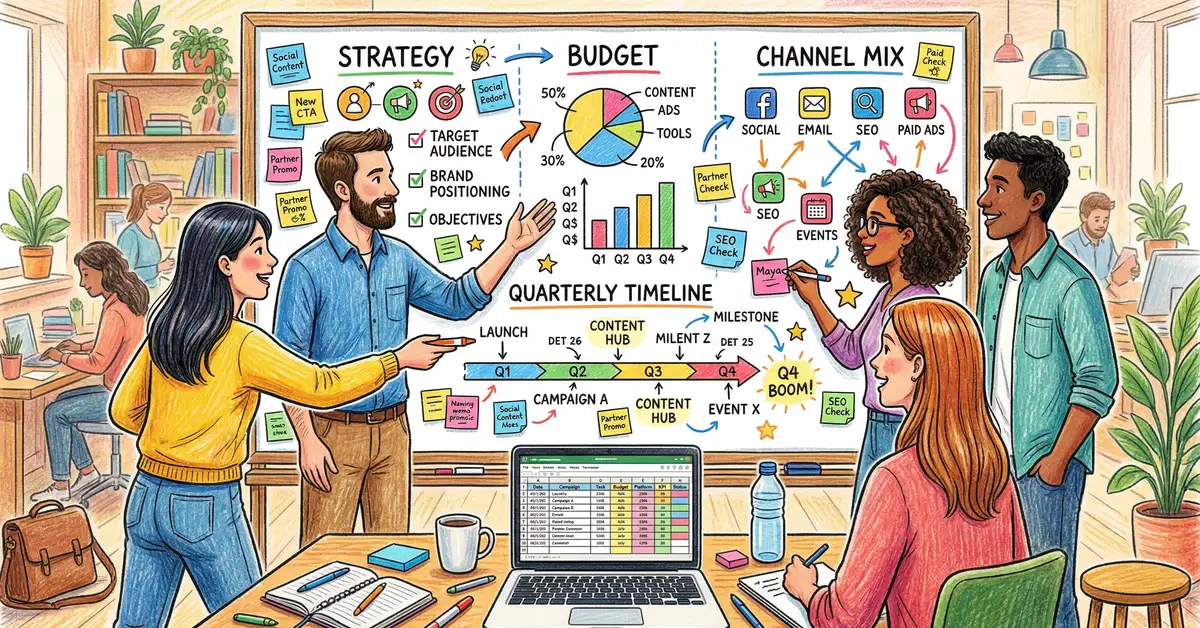
A marketing plan template gives your team a proven structure that turns scattered ideas into a focused, measurable strategy, so you are not building from scratch each cycle. Without one, it is easy to end up running marketing with no documented plan at all.
9.4%
Of Revenue Spent on Marketing
US companies, 2025 average
6.4%
B2B Product Companies
Marketing spend as % of revenue
9.0%
B2B Services Companies
Marketing spend as % of revenue
3.3%
Marketing Spend Growth
Over the prior 12 months
Source: The CMO Survey 2025 (Duke University, Deloitte and the American Marketing Association; 281 US marketing leaders, January–February 2025)
Structured frameworks like SOSTAC or RACE help you spend that budget on purpose. A template doesn't replace strategic thinking — it channels it into the right structure so nothing critical gets missed.
Key Takeaway
A template gets your first draft started from a proven structure and makes sure nothing critical is missed. The biggest risk isn't having a bad plan — it's having no plan at all.
Download Your Free Marketing Plan Template
Get all three formats in one ZIP — Excel (with working formulas), Word (SOSTAC-structured), and PDF (print-ready).
8 tabs · 46 formulas · B2B budget benchmarks · RACI matrix · Campaign calendar
See what Mary finds on your website.
Join the early-adopter list and be one of the first to try Mary on your own website.
Plans from Free to Enterprise · pricing to be confirmed

A marketing plan template should cover eight core sections that move from strategic context through to measurable execution. The SOSTAC framework, which the Chartered Institute of Marketing (CIM) teaches in its strategy and planning qualification, maps directly to the sections below.
| Section | What to Include | Why It Matters |
|---|---|---|
| Executive Summary | Business objectives, key targets, budget overview, major initiatives (1–2 pages max) | Aligns plan to C-suite priorities |
| Situation Analysis | Market position, competitive landscape, SWOT, internal capabilities audit | Sets strategic foundation; weak analysis leads to misaligned tactics |
| Customer Segments & Personas | 3–5 core personas with demographics, psychographics, buying journey, pain points | Campaigns without clear audience understanding miss their mark |
| Objectives & KPIs | SMART goals tied to revenue, pipeline value, CAC, brand awareness targets | Gives the plan a measurement framework from day one |
| Strategy & Channel Mix | Positioning, messaging pillars, channel selection rationale, content themes | Unclear messaging and positioning undermine every later section |
| Budget & Resources | Channel-by-channel spend, cost-per-lead targets, headcount, agency and freelance allocation, 10–15% contingency | Under-resourced plans stall |
| Tactical Execution | Campaign calendar, content roadmap, lead nurture sequences, ownership (RACI matrix) | Unclear ownership is a common cause of execution failure |
| Measurement & Control | Dashboard design, reporting cadence, attribution model, contingency triggers | Enables mid-year course correction |
If you're building buyer personas from scratch, complete those first — they inform every downstream section of your marketing plan, from messaging to channel selection to budget allocation marketing ROI calculator.
The two most widely adopted frameworks in B2B marketing are SOSTAC and RACE, and using them together gives you the best results. SOSTAC handles annual strategic planning while RACE structures quarterly tactical execution within that strategy.
SOSTAC (Annual Strategic)
Situation → Objectives → Strategy → Tactics → Action → Control. Best for comprehensive annual plans. Developed by Paul Smith and taught in CIM qualifications. Takes 12–15 weeks for a full planning cycle.
RACE (Quarterly Tactical)
Reach → Act → Convert → Engage. Best for campaign-level and digital-first planning. Developed by Dave Chaffey at Smart Insights. Takes 4–6 weeks per campaign cycle.
For small and mid-sized teams (50–250 employees), the most effective approach is a hybrid: one SOSTAC-based annual plan plus four RACE-based quarterly tactical plans. This gives you strategic direction without locking you into rigid annual commitments that teams often abandon mid-year.

Your marketing plan template format should match how your team actually works, not what looks most impressive. Each format has distinct strengths depending on your team size, tool stack, and planning style.
| Format | Best For | Strengths | Limitations |
|---|---|---|---|
| Excel | Budget-heavy plans, data-driven teams, financial modeling | Formulas, pivot tables, budget calculations, works offline | Weak on narrative strategy, version control issues |
| Google Sheets | Collaborative teams, real-time updates, remote/hybrid organizations | Real-time collaboration, cloud-based, comment threads, free | Limited formatting, slower with large datasets |
| Word/Docs | Strategy-first plans, board presentations, narrative-heavy documents | Strong narrative flow, professional formatting, easy review cycles | Poor for budget modeling, static data tables |
| Final distribution, board sign-off, external sharing | Fixed formatting, professional, print-ready | Not editable, can't be updated without re-exporting |
Most teams benefit from using two formats together: a narrative document (Word or Google Docs) for strategy and positioning, paired with a spreadsheet (Excel or Google Sheets) for budget allocation, campaign calendars, and KPI tracking. This hybrid approach gives you strategic depth without sacrificing the data flexibility your finance team needs for budget approvals.
Our free template pack includes all three formats — Excel for budgets and KPIs, Word for strategy narrative, and PDF for board distribution.
Download the Template Pack ↑Completing a marketing plan template takes most small and mid-sized teams 2–4 weeks when following a structured process. Here is the sequence that high-performing teams use, based on the SOSTAC framework taught by the Chartered Institute of Marketing.
Run Your Situation Analysis (Days 1–5)
Audit your market position, competitive landscape, internal capabilities, and existing assets. Use a SWOT or PESTLE framework. This sets the foundation for every later section.
Define Your Personas & Objectives (Days 3–7)
Build 3–5 buyer personas with demographics, pain points, and buying journey. Then set SMART objectives tied to revenue — not vanity metrics. Use our buyer persona tools comparison to find the right tool for your team.
Set Your Strategy & Channel Mix (Days 5–10)
Define your positioning, 3–5 core messaging pillars, and channel selection rationale. Choose 3–4 channels that will drive 80% of your results.
Build Your Tactical Roadmap (Days 8–14)
Map campaigns, content themes, and lead nurture sequences into a quarterly calendar. Assign every initiative a clear owner using a RACI matrix. This is where marketing workflow automation helps, by connecting execution to your plan.
Set Up Measurement & Control (Days 10–14)
Design a one-page KPI dashboard with 8–12 metrics (no more), set a monthly reporting cadence, and define contingency triggers. Include both leading indicators (content output, email CTR, traffic) and lagging indicators (MQLs, CAC, revenue attribution). Plans with built-in measurement frameworks are easier to revise mid-year — and those revisions are what separate good plans from great ones.
The Cost of Skipping Ownership
Common mistake: Creating a marketing plan with objectives and tactics but no clear ownership or accountability structure.
The reality: plans fail when nobody owns the execution. Every initiative in your plan needs a named Responsible and Accountable person in a RACI matrix — not a team name or department, but a specific individual.

When filling in the budget section of your marketing plan, use these UK B2B benchmarks as starting points. The DMA UK and CIM publish annual data on channel allocation that most B2B teams use for budget justification.
| Channel | % of Budget | Notes |
|---|---|---|
| Paid media (LinkedIn, Google Ads) | 35–42% | LinkedIn dominates B2B paid (~70% of paid spend); Google Search for high-intent |
| Content & inbound | 28–35% | Blog, video, whitepapers, case studies — your content pipeline engine |
| Marketing operations & tools | 12–18% | CRM, automation, analytics infrastructure — often underbudgeted |
| Events & partnerships | 8–15% | Trade shows, webinars, sponsorships, partner marketing |
| SEO & organic | 4–8% | Often embedded in content budget; separate line item improves accountability |
| Experimentation | 2–5% | Testing new channels, A/B testing, pilot initiatives — high performers always reserve this |
Sources: DMA UK 2024, CIM Benchmarks 2023–2024
For the overall budget, The CMO Survey 2025 (US) found that B2B product companies spent 6.4% of revenue on marketing and B2B services companies 9.0%. These are baseline benchmarks — your specific allocation should be informed by your situation analysis and competitive position. If you're running AI marketing automation, you may be able to shift some manual operations budget into higher-value channels.
Here is a simplified example showing how a B2B SaaS company ($8M revenue, 120 employees, 5-person marketing team) might complete the key sections of a marketing plan template.
| Section | Example Content |
|---|---|
| Objective | Grow marketing-sourced pipeline from $1.2M to $1.8M (+50%) by Q4 2026, with CAC under $800 |
| Target Audience | Heads of Operations at US construction firms with 50–250 employees |
| Positioning | Project-management software for construction firms that shows every job's cost in real time |
| Channel Mix | 40% LinkedIn Ads + organic, 30% SEO/content, 15% email nurture, 10% webinars, 5% experimentation |
| Budget | $480K annual (6% of revenue): $192K paid, $144K content, $72K ops/tools, $48K events, $24K testing |
| KPI Dashboard | MQLs (80/month), SQL conversion (20%), pipeline value ($150K/month), CAC (target $750), content output (12 pieces/month) |
| Q1 Priorities | Launch 3 pillar pages, run LinkedIn ABM campaign targeting 200 accounts, host monthly webinar, publish 12 articles a month |
This example demonstrates how each section connects: objectives drive channel selection, channel selection drives budget allocation, and budget allocation drives tactical execution. The plan becomes a living document that your team reviews monthly and revises quarterly.
A marketing plan template is only valuable if it leads to consistent execution. The biggest risk after completing your plan is the gap between strategy and daily operations — this is where plans tend to fail, more often than at the strategy stage.
Three actions to bridge that gap immediately:
Automate your execution layer. Connect your plan's tactical roadmap to automated workflows that handle campaign launches, content publishing, and lead routing without manual handoff. A tool such as Marketing Mary can take the articles in your plan's content calendar template and write them, with a person approving each one, freeing your team to focus on strategy and optimization.
Build measurement into your daily rhythm. Don't wait for monthly reviews to check progress. Set up a lightweight weekly check on 3–4 leading indicators (content published, email engagement, LinkedIn impressions, new leads) so you can course-correct before lagging indicators show problems.
Schedule your quarterly review now. Put a 2-hour block on the calendar for quarterly plan review and revision. Scheduling reviews upfront makes it far more likely that the mid-year revision actually happens.
How long should a marketing plan be?
For small and mid-sized teams (50–250 employees), aim for 12–18 pages covering strategy, budget, and tactical execution. Startups can work with 6–8 pages focused on 3–5 core initiatives. Enterprise plans typically run 25–35 pages with multi-product roadmaps. The length matters less than having clear ownership and measurable objectives in every section.
How often should I update my marketing plan?
Best practice is one annual strategic plan with four quarterly tactical updates. High-performing teams review monthly and make meaningful revisions quarterly, revising plans mid-year based on performance data rather than waiting until the next annual cycle.
What is the SOSTAC framework for marketing planning?
SOSTAC stands for Situation, Objectives, Strategy, Tactics, Action, and Control. Developed by Paul Smith and taught in Chartered Institute of Marketing qualifications, it provides a six-stage structure for comprehensive marketing planning, and many teams use SOSTAC or a variant of it for annual strategic plans.
Should I use Excel or Google Sheets for my marketing plan template?
Use Google Sheets if your team is collaborative and remote — the real-time editing and comment threads are invaluable. Use Excel if you need complex budget modeling with pivot tables and formulas, or if your finance team requires it. Most teams benefit from both: a narrative strategy document in Word or Google Docs, paired with a spreadsheet for budgets, calendars, and KPI tracking.
What budget should I allocate to marketing as a percentage of revenue?
In The CMO Survey 2025, a survey of US marketing leaders, B2B product companies spent 6.4% of revenue on marketing and B2B services companies 9.0%; the average across all companies was 9.4%. Treat these as a starting range, then adjust for your growth stage, sales cycle and competitive position.
Can AI help create a marketing plan?
AI tools can accelerate specific sections — competitor analysis, messaging framework generation, content calendar suggestions, and budget allocation recommendations. However, AI outputs lack strategic thinking about your unique market position and internal dynamics. The best approach is using AI for first-draft generation with human strategic review and refinement. Once the plan is set, Marketing Mary can write the articles in it, and a person approves each one before it's published. Our AI content strategy guide covers the method.
See what Mary finds on your website.
Join the early-adopter list and be one of the first to try Mary on your own website.
Plans from Free to Enterprise · pricing to be confirmed
Clwyd Probert
Founder, Marketing Mary
Clwyd Probert is the founder of Marketing Mary, an evidence-first persona intelligence platform for B2B marketing, and CEO of Whitehat, a London-based SEO and inbound marketing agency and HubSpot Diamond Solutions Partner.
Sources: The CMO Survey 2025, DMA UK 2024, Chartered Institute of Marketing 2023–2024, Smart Insights (RACE Framework)
 Clwyd Probert: Sep 30, 2026, 8:25:00 PM
An evidence-graded buyer persona is a buyer persona in which every claim carries a label saying where it came from: first-party evidence (the...
 Clwyd Probert: Sep 9, 2026, 11:58:11 PM
Our own Search Console tells this story: impressions up 53% and clicks down 6% in the 28 days to September 6, 2026, compared with the 28 days before,...
 Clwyd Probert: Aug 25, 2026, 10:16:09 AM
You can find HubSpot's credit rates. You can find your monthly allowance. What you cannot easily find is the sentence that connects them — so most...
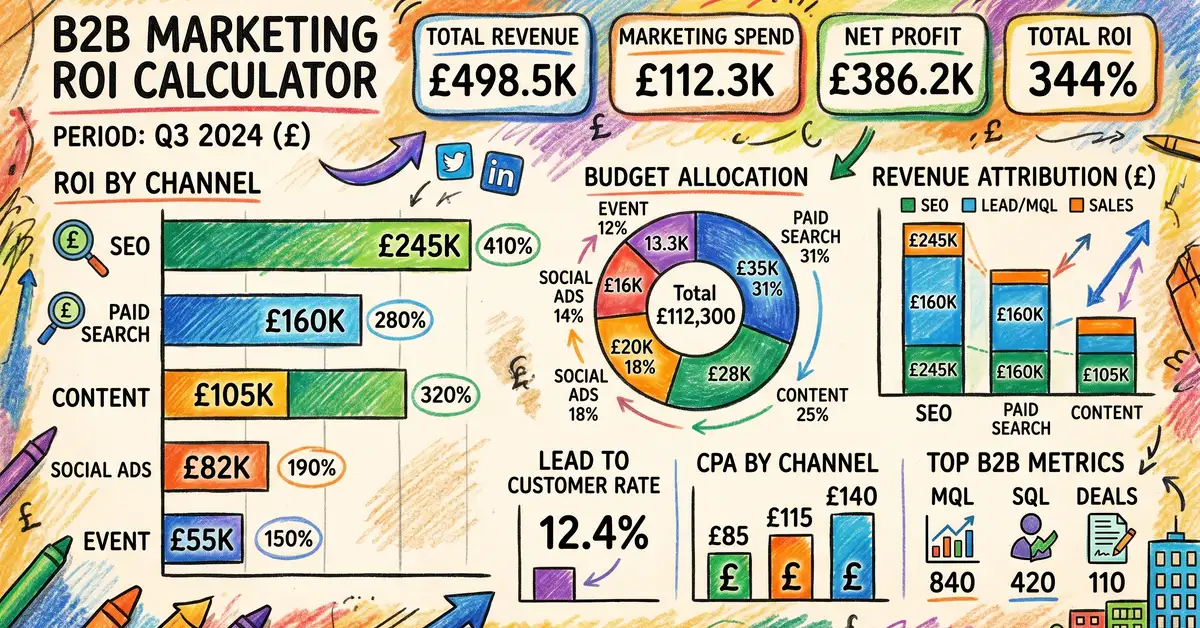 Clwyd Probert : Apr 18, 2026, 11:00:00 AM
Free marketing ROI calculator with channel-specific formulas and B2B benchmarks. Downloadable Excel workbook with scenario models and attribution...
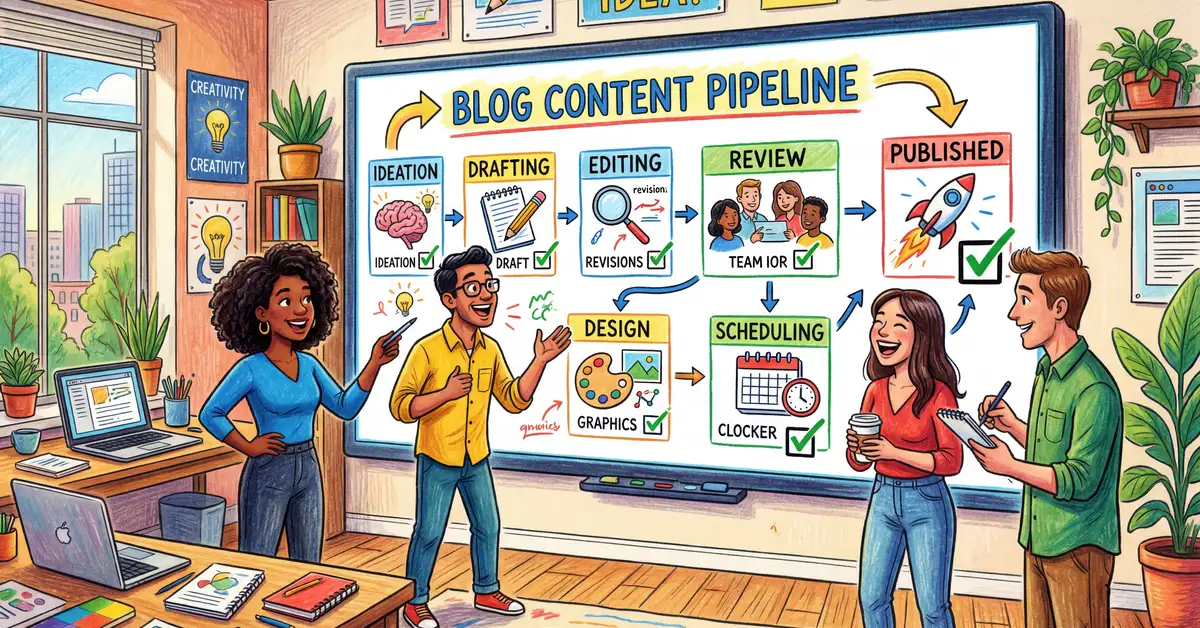 Clwyd Probert : Mar 27, 2026, 10:00:00 AM
Compare AI blog writer tools across all 9 publishing steps — from research to live verification. See which tools stop at drafts and which go further.
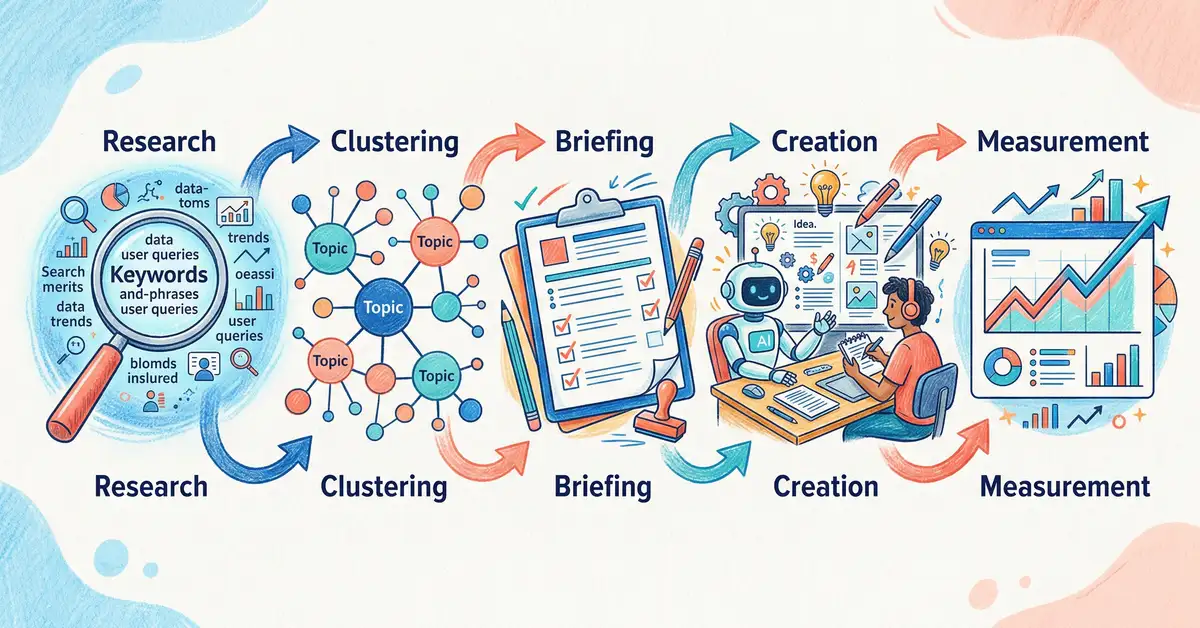 Clwyd Probert : Mar 26, 2026, 9:00:00 AM
Build an AI content strategy, from research and clustering to briefs, creation and measurement, with a five-stage framework.